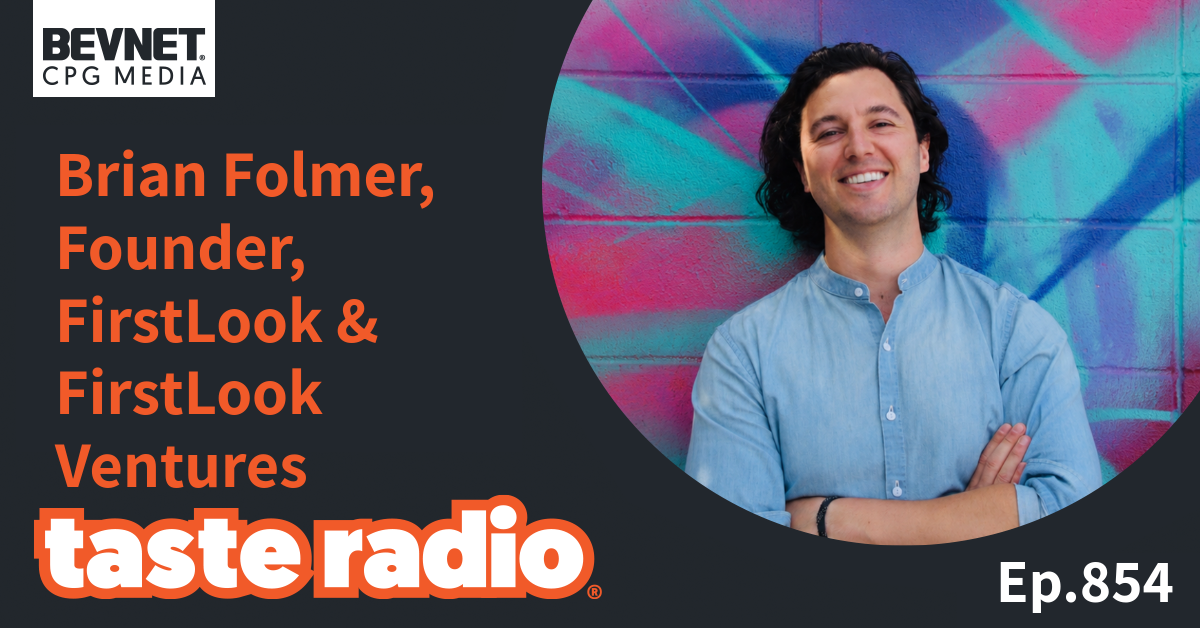
[00:00:09] Ray Latif: Hello, friends. I'm Ray Latif, and you're tuned in to Taste Radio, the number one podcast for anyone building a business in food or beverage. What does it take for an emerging CPG brand to go from promising to investable? Brian Folmer, the founder of First Look and First Look Ventures, offers a behind-the-scenes look at how he evaluates the next generation of consumer brands. First Look is a shark tank in a box platform that vets hundreds of brands before putting a select group of products in the hands of nearly 100 investors, while First Look Ventures takes that deal flow a step further by investing alongside its investor community. Brian reveals what catches his attention, from traction and valuation to market potential, founder quality, and the elusive X-factor, and shares why some brands make the cut while others don't. He also explains why overpricing a company can stall a fundraise, how potent consumer pain points can create breakout opportunities, and why today's shift toward cleaner, less processed products is creating new opportunities for CPG founders. Hey folks, it's Ray with Taste Radio. Right now, I am supremely honored to be sitting down with Brian Folmer of First Look and First Look Ventures. Brian, it's great to see you. Yeah, great to be here.
[00:01:36] Brian Folmer: Appreciate you having me.
[00:01:37] Ray Latif: Coming in all the way from the great city of Cleveland, Ohio. All day. I have to admit, Brian, I'm just going to make this admission now. I may have poked fun at Cleveland from time to time on this podcast. I'm sure you've heard similar things about the city. It's a great city. I've been there, you know, and I don't know why it gets so much ridicule. I mean, you're not the first.
[00:02:00] Brian Folmer: Yeah. Yeah. A lot of people like to make fun of Cleveland in one way or another, but I guess we make a lot of noise. And so at least we're on all those radars. Yeah. But yeah, everyone from Cleveland is super passionate about the city. And so always nice to be back there. And yeah, I moved back up four years ago after living in New York and wouldn't want to be anywhere else. You born and bred? Born and bred. Yeah. Yeah. So wanted to leave Cleveland at some point just to see what the rest of the world was doing, but always wanted to get back there at some point.
[00:02:28] Ray Latif: I went to school there too. The Ohio State University.
[00:02:31] Brian Folmer: Yeah, like every good old Ohio boy went to OSU. And, uh, yeah, I mean, it was fun, obviously a big school. And, and I think like with most people, what you learn in college, and then when you got into the real world, you realize, oh, well, college prepared me a little bit, but so much more came from working on the job. Ohio State was great though, for learning a lot of those soft skills and like understanding how to work with other people and building communities. And, and so, yeah, I, I loved every moment of it.
[00:02:59] Ray Latif: I say the same thing about BU. I went to Boston University and I graduated with a degree in business and less than 10% of what I do now has anything to do with my degree.
[00:03:12] Brian Folmer: I know. I don't know if it's a good thing or a bad thing. I actually have kind of maybe a different background than some of the other traditional folks in VC. I wasn't an investment banker. I wasn't a consultant. I honestly wasn't smart enough to have, or at least I didn't have the grades to have those jobs. After I graduated from OSU, I went to law school. And between my first and second year of law school, I was interning at a startup accelerator, which I only got the job because I just kept pounding their inbox. And I was like, I want to work here. I'll do it for free if I have to. How many emails did you send? At least 15. Okay. Definitely. Yeah. And different people in the office too. That's always a good move. I was determined. And yeah, I ended up working there and it was the first time in my life where I got up and I was excited to go to work every day, which I'm like, all right, this is a good sign. And then I had been working on an idea on the side during law school, and I submitted it to The Accelerator as a company that they could invest in. And sure enough, I got in. And so I ended up taking an investment from The Accelerator and dropping out of law school. And so I went from basically employee to founder overnight. And yeah, it was a great experience. Unfortunately, that first company didn't have the legs to go the distance and so I had to shut it down. And then instead of going back to law school, jumped in the corporate world for a little bit just because I was dead broke at that point. Did that for about five or so years, made my way out to New York City. And then, yeah, once I was in York, I was like, all right, I have to get back into the startup world. And so I applied to XRC Ventures. And this is a hack for anyone that's trying to get into VC. So accelerators will routinely take people that don't have the investment banking background, for example, or the consulting background. But for an accelerator, if the team is small enough, that means there's not a dedicated HR person at the firm. And this goes with any VC firm. But accelerators are easier, I think, to get into than a traditional firm. And so the hiring person that's doing the hiring for whatever role, that's not their normal job. They're stretching to have that job or to solve it, I guess, for the firm. And so I figured out who at XRC was in charge of that, emailed them. I used words like, Hey, I'm a quick learner. I'll get up to speed quick. Yeah, obviously interviewed for them as well. And I think that helped me get the original associate role. And then, uh, yeah, when I was XRC, got promoted to a strategic partnerships and business development. And then from there, yeah. Ended up starting First Look. But yeah, that was my way in was working at two different accelerators and also having a little bit of founder experience in the background.
[00:05:49] Ray Latif: The box, if we're talking about First Look, the box versus First Look Ventures, which are two separate entities, correct? Yeah. Yeah. First Look. Was that also sort of an inroad to you launching a venture company or which came first?
[00:06:04] Brian Folmer: Yeah, absolutely. First Look came first and then it wasn't until probably about three or four years later that we decided to start First Look Ventures.
[00:06:12] Ray Latif: And so First Look, just for folks who are unfamiliar, people have described it as a shark tank in a box model, which puts products in investors' hands, which is a brilliant idea. I'm wondering, has this concept ever been introduced before First Look? Have we ever seen something like this prior to your company?
[00:06:31] Brian Folmer: I mean, investors will tell you, never say someone isn't doing what you're already doing. But to the best of my knowledge, I don't know if anyone else is doing this. So yeah, we, we essentially pioneered the concept of us diligencing brands, taking their samples, putting them in a box and sending them out to all the members in the group.
[00:06:48] Ray Latif: When you say we do the diligence, what diligence are you doing?
[00:06:52] Brian Folmer: So of course we review decks, data rooms. We jump on a call with every founder and ask them the tough questions that I think investors will probably ask them. And then afterwards we do some more homework after that call and try to dive in even more. And then once we think we have, what are the top six or seven brands, then we give them an invite to jump in that upcoming month's box.
[00:07:12] Ray Latif: And it's, it's once a month that you send to how many investors?
[00:07:17] Brian Folmer: Right now we're just shy of about a hundred members. Okay. But yeah, they always ship out usually the last few days of every month and arrive to everybody's house by the first week of the following month. How many products or brands are represented in each box? Usually six or seven. Sometimes around like Christmas time, I'll flex to eight. I guarantee five, but it's pretty easy to always get at least six, six to seven. How does inbound work? I mean, in the early days we were hustling. When I was living in New York, I was going to all the events. I mean, eight days a week and meeting founders and trying to experiment with different strategies, being more active on LinkedIn, having an Instagram profile, posting pictures there. But now we're at this point where there's a compounding effect that's happening. And so this July box that just wrapped up. We officially hit 500 startups that have gone through our boxes and June was our sixth year anniversary. And so, yeah, I think a lot of founders had great experiences when they went through. And so then they tell their founder friends and they apply. And so we get the kind of the upcoming brands that are, you know, starting to fundraise. We always try to support the portfolio companies of our investors. It's not a shoe-in just because they're an investor that they'll get in the box. We still have a very high bar for who makes it in, but if it does come down to a 50-50 split between one brand and the portfolio, you know, our member portfolio company's brand, we'll opt for them. And then I guess the third part is just outbound. I have no shame sliding in someone's DMs. When I go on Instagram, I like all the ads that I get for any consumer product because I want them to keep feeding me it. And so, yeah, a lot of outbound, but then also, yeah, we've been blessed now to have a lot of inbound as well.
[00:08:55] Ray Latif: If there is a success rate that you could attribute to brands that have shown up in First Look, what would it be? So for example, if a brand is in one of your monthly boxes, what's the potential that they will get an investment? Do you have a sense of how many or what percentage of them get investment?
[00:09:16] Brian Folmer: Currently this year, we've made 12 investments and we're only seven boxes in. And so at least one, almost two brands per box are getting an investment. I personally always kind of frame things with the founders is just being in the box, I think is already a win. And so obviously we hope that an investor falls in love, they write you a check and you're on your way. But worst case scenario is if you have a great product, then you'll probably convert a lot of those investors into premium consumers for the brand. And so this has been a learning curve over the years is setting those expectations with founders. Cause yeah, some of them come in and they're like, Oh man, we're going to get in front of all these investors and raise all this money. And it's like. Just because you're in the box doesn't mean this is a guaranteed shot. You still have to win the investors over. You still have to have a great deck, a great story, a great value prop to get those investors involved. And so otherwise, oh yeah, I think just being in the box is a great win for brands.
[00:10:19] Ray Latif: Do brands have to pay to participate or how does that process work?
[00:10:24] Brian Folmer: Nope, totally free for them to jump in. The only thing I need is the samples that go in the boxes. And we used to years prior, it was a few hundred bucks to jump in the boxes, but we ended up dropping that once we had enough investor members to help us keep the lights on. So the investor members pay you for the boxes? Yeah, they have a membership each year that they pay. And so, which comes with the community and support side, then obviously the deal flow side. But otherwise, yeah, totally free for the brands to jump in.
[00:10:51] Ray Latif: You brought some products with you. Why don't I jump into those? I do for our audience want to just unpack a little bit about how First Look, B.O.R.E., First Look Ventures and how the two work together. I assume you invest in some of the brands that are in your boxes as well, but how did the venture arm of what you do come about?
[00:11:11] Brian Folmer: It kind of just came out of necessity, I guess. With the advent of SPVs, if you have an investor base who is interested in brands and you have the deal flow, why not marry those two up? I mean, it seems like a pretty natural fit. Yeah. And I mean, don't get wrong, just investing in a founder and trying to support them as they scale, it's, you know, it's an honor and a journey. And so it's something I always wanted to do, but it does take a while to get to that point where you have a large enough investor base. You have deals that investors want to be a part of. And it's funny, SPVs are interesting in that, you know, there's pros and cons to doing SPVs versus having a dedicated fund. Sometimes with SPVs though, you can't be as contrarian as you would like, because you're essentially hoping the investors that you work with, your LP base, feel the same way about a deal as you do. And sometimes they do, sometimes they don't. Sometimes I'll see a brand where I'm like, this is a good deal. We need to be in this. It's not the standard deal that maybe we're looking at, but I think there's something special here. And sometimes LPs are like, yeah, no, Brian, I don't see what you're seeing. And they don't invest. But yeah, there's pros and cons to having a dedicated fund and doing SBVs.
[00:12:26] Ray Latif: There's a lot to unpack there because you talked about this is a deal we need to be a part of. There's something special about this brand. I almost think those are two distinct aspects of investment. There's the deal side, which is, this is a good deal for us. We're going to get something financially great out of this. And then there's the X factor, trendiness, founder quality of a brand that is sometimes very subjective, but sometimes it's based on objective experience, seeing brands win, seeing brands succeed. How did that work in your mind when you want to make an investment that you say, This might have great implications financially for us, but isn't completely there yet. Or the other way, like, this is a great brand with a great founder, but the terms or just something financially is a little off.
[00:13:17] Brian Folmer: I mean, you're asking one of the toughest questions in BC there. Yeah, I mean, first and foremost, if the math doesn't math, it's hard to get behind it. And there's been so many brands, and I always try to tell founders, like, just come in with a fair valuation. Cause there are companies, plenty of them I've seen where I want it to be a part of that. I do think they're going to succeed. Is their valuation right? Probably not. And so it's not worth us jumping in. But then in the day, it's really comes down to what I, and then our LP base thinks, this is what the world's going to look like in five, 10 years from now. And how does this brand fit in to that world? And so you kind of have to marry up. Does the math work? Does the brand fit where we think the world's going? And it's tough. Some people have very different opinions on what makes sense. And obviously when there's brands that have a very fair valuation, you're like, all right, we need to make a move on this because we're not the only investors that are seeing this. One of the things I always tell at least my team and friends is a great deal doesn't go to too many inboxes until it gets totally filled up. And so, yeah, sometimes you have to move quick on these things because other people see the same thing you're seeing.
[00:14:31] Ray Latif: If you're talking to founders, and you are right now, how do you advise they think about valuation if they're, say, a year or two in? How much do sales metrics play into that valuation? How much does just potential, brand potential come into play? It can be a pretty obscure process, I know. Yeah.
[00:14:48] Brian Folmer: So I would say you start with the averages. Because I think a lot of investors that are in the space, always looking at deals, you see enough deals where you can kind of triangulate, all right, this brand has this much revenue and there's many stores and here's what the team looks like. And then here's similar brands I've seen and their metrics. And so, and their valuation was this. And so we're thinking that this brand should be around that. And of course there's other attributes that, all right, This is a unique point that they don't have like their best friends with Barack Obama. And so he's going to promote the brand. OK, that's interesting. I'll score you a few more points on the valuation side. But otherwise, I always recommend founders just come in with a fair valuation. And I've seen this over and over again. They go out with a high valuation. they get turned down by a lot of investors. And now you've burned three, six, 12 months trying to fundraise. And when you have a great, or a fair, or even, I don't know, great valuation, it just greases the rails for investors to move quicker. Investors are the same people as any of us walking around. Like we love a good deal. And so, yeah, when you come up with a high valuation, now all of a sudden the bar for diligence and the investor questioning, is this worth paying a premium for? They really put that under a microscope and it just slows the process down. And in some cases, if you're building a brand where it's a very novel product, you're the first to market with it. Speed is your, your best friend. And so the more time you take fundraising, that's more time that's taken away from scaling and building. And at the end of the day, that's what founders are put on earth to do build. And so, yeah, that's probably the biggest mistake. And I think with valuations is, uh, just going too high. I get it. We all want to hold on to equity. Sure. No question about that. But there are a lot of ways you can make up that equity down the road. For now though, you need to get out of the gates and then yeah, go from there.
[00:16:53] Ray Latif: Let's talk about a real world brand that you've invested in. That'Using Laurel's Coffee, which I have a lot of respect for. It's a great brand, great tasting brand. One that honestly I didn't see coming because I didn't really think A2 Milk was going to move the needle for a lot of folks and retail buyers. And of course I'm wrong about that. You know, we get some things wrong or maybe me specifically at Bevanette, I get things wrong, but they're national and Whole Foods. They seem to be doing pretty well. What did you see in that brand that gave you confidence that it was a good investment?
[00:17:25] Brian Folmer: Well, first and foremost, Isabelle just hustled the founder. Yeah. She is out there active, pushing the brand for, I mean, she lives for this Brad Avery day. And so that's great sign. And then second, yeah, they're just, their velocity was something to look at. And they were, you know, not only in stores, but just the amount of retailers that were reaching out to them. And, uh, always a good sign. Cause I always, one of the questions I always ask during diligence is what are the retailers saying? Like, tell me about those conversations. Retailers make a living by selling products that people want. And so they spend a lot of time trying to figure out what's going to sell. And so they have a good opinion that I respect. And, uh, yeah, there was, I think a lot of interest from retailers. And so it was worth having, yeah, Laurels in the boxes. Did she give you a good valuation or was she wise about her valuation?
[00:18:14] Ray Latif: It was fair.
[00:18:15] Brian Folmer: Yeah, no, she was great. And so, and the round got done.
[00:18:19] Ray Latif: Yeah. Yeah. Yeah. Well, I mean, that's always one of the most difficult things is just getting that first or second round done as an early stage beverage investor when you're, you know, I don't even know, I wonder what the numbers are like for brands that actually hit half a billion dollars in sales, how much they raised in those first five years. And it's, on average, I would think it's, what, 50 million, 60 million, something like that? Yeah, it gets up there. Yeah, it's a lot of money. Did you bring any beverages in your bag here or? No, I couldn't get through TSA with any beverages. Oh, that's right. Of course. Of course. Okay. All snacks. All right. Yeah. So we're jumping around here, but I want to get into some of the decision process or what actually gets into a box using again, real world examples. All right. Let's see the first brand here. All right. So we have. Oh, yes. Milk. Yeah. Yeah. We've talked about this on the podcast. Yeah. Have you tried it? I have not, but our CMO, Mike Schneider, was raving about it. He actually mixed it. So just for context, meals is a cereal protein shake. They come in these large pouches with a screw top cap, and they promote 22 grams of protein, two grams of sugar. You mix it with water or milk or some sort of plant-based milk if you want, and you've got yourself a nutritious meal replacement or just protein shake. So Mike actually mixed it with, if you can believe this, a caffeinated banana milk. Why not? That he really enjoyed. And the brand is spelled M-I-I-L-S. I believe it's supposed to be pronounced meals, maybe, perhaps? Okay, meals. I think we called it Mills. Whoops. No, you're good. So the diligence you did on this was pretty similar to everything else you do, where... I assume that. That's correct, yeah.
[00:20:00] Brian Folmer: Yeah. I mean, they just had really good early traction and going from zero to, you know, hundreds of thousands in sales in a very short period of time. It's a great sign. I mean, it looks like they know how to execute. Obviously people want the product. And so that was kind of the starting point to figure out if this was a good, good one to have in the box.
[00:20:17] Ray Latif: This seems like a D2C brand. At least that's how they started out. It seems like they started out D2C. How much does D2C versus retail impact your evaluation?
[00:20:26] Brian Folmer: Not really, not too much. Yeah. DTC, obviously a lot of people start there. You learn, iterate, build some traction that then you pitch to the retailers of why they should carry you. But I've seen founders that go from first production run right to retail. If you have that ability, then go for it.
[00:20:41] Ray Latif: Yeah, I mean on the beverage side. It's almost if you're a Traditional if you're playing in a traditional beverage category, it's actually kind of hard to go. Yeah. Yeah. Yeah. I'm saying all right meals I'm glad you brought that out first. Let's see what else All right Boost Cous a protein-packed couscous comes in a beautiful What do you call it royal blue box? You got that nostalgic branding going on, 18 grams of protein, 11 grams of fiber. This is the OG variety. It looks like a mac and cheese box, but it's got couscous, protein packed couscous. I have not seen a, I've seen a protein everything. I have not seen a protein couscous yet. So interesting.
[00:21:20] Brian Folmer: Yeah. I mean, someone had to do it. So, but how many people are eating couscous? Well, so this is the interesting argument or what I think founders should consider. Is your product going to increase the TAM or the market size? Because yeah, there may be only be, you know, we'll just make up a number, 800 million sales in couscous. But that's because there's a bunch of old incumbents that people don't really care for in life. And so the question is, is this brand going to increase the market size where people that weren't traditionally eating couscous are now coming in? And now it makes it interesting because it's like, wow, this could actually be a lot bigger, which is the classic story of Uber. Everyone thought it was just taxis. And actually it's a lot bigger than that, you know, the market. So, and so, yeah, we'll see if they can pull that off.
[00:22:01] Ray Latif: I like it, you know, my own personal opinion on this is, this is, before you even hopped on the mics, we were talking about, you know, everyone's coming to the market with great branding. A lot of modern branding starts to look a little bit the same. And you're wondering if this product, to your point, fits a lot of households or maybe fits, you know, a few households in New York City or West LA or something like that. And so, interesting concept. For me, I'm also wondering about price point because the meals I'm saying, okay, well, if I'm getting a full meal protein shake, that's going to sustain me, you know, for a number of hours, $5, $6, $7. Okay. Bouscous, if I'm paying $7 for a box of couscous, I'm wondering how does price point fit into your strategy here?
[00:22:48] Brian Folmer: I would say I was a little bit more price sensitive earlier on. However, I don't know if you follow a lot of the economists and investor Wall Street types out there, but they say we're entering like a K-shaped economy. Yeah. Yeah. And so you're either getting ahead or falling behind. And so I do wonder if there is a... opportunity, a window right now for brands that maybe were at a higher price point and wouldn't have worked out five or 10 years ago. Could they work out now? Cause yeah, the people who have the money, they're spending it. And so, yeah, otherwise the price point obviously is something to consider and like where you sit on the shelf and who you're, who you're targeting, but people just can't seem to stop spending. And so we'll see what happens.
[00:23:33] Ray Latif: If this Boost Cous is $6 a box, does that give you pause when it came to your attention? And if they told you this is $6 a box, would that give you any kind of pause or would you have to reconsider putting it in your box?
[00:23:46] Brian Folmer: I'll ask them, where do you, like your price point now, is that always going to be that way? You know, as economies of scale kick in, do you want to bring that lower? Where do you want to sit for almost like the planogram on a retail shop? Where do you eventually want to sit? Who do you want to appeal to? And so I do ask that to see how, you know, where they're going with it.
[00:24:01] Ray Latif: Just to be clear, I like what you're doing, Booskoos. I'm just picking on you because it's, you know, I'm being the devil's advocate here. So anyway. All right. Good stuff. Yeah. Two for two, I think, at least in terms of conversation. Sousa, all-in-one recovery drink mixes, protein and hydration, 20 grams of whey protein, 1,500 plus milligrams of electrolytes, 100 calories, and only four grams of sugar. Do they come in stick packs, is that what it is? Yep. Okay, so this is a bag of, looks like eight stick packs, or eight packets, is that correct? Yeah, I think so. Oh, I'm sorry, Six. My eyesight's completely going. Another brand that actually is very reminiscent of that nostalgic branding, the sort of chunky lettering, chunky font that you see with a lot of emerging brands. Remember Ugly back in the day? Sure. Ugly was like an OG of that kind of branding. I love that branding. Oh my God. Yeah. Ugly Drinks, which was a runner up in one of our New Beverage Showdown competitions. You know, I, I see a lot of DTC potential for this. I'm trying to figure out how they, a product like this fits on retail store shelves. Cause it's kind of big. Yeah. But, uh, for me, I'm just like, does it taste good? And they have a vanilla flavor, a strawberry milkshake and a salted orange. Salted caramel. Is that salted caramel? Yeah. Cool brand.
[00:25:26] Brian Folmer: It tastes unbelievable. Not that I'm a huge hydration or protein drink guy, but that one was... It's, especially if you use like a, either a milk or a plant-based milk. Oh man, you'll drink it pretty quick. It's almost too sweet. I mean, they could even dial it back a little bit. It's, it's good. Worth a shot.
[00:25:44] Ray Latif: I'm noticing a theme here, as I'm sure our listeners are. You got protein, protein, protein. What's happening here? All right, here's a different one that's not protein. Okay. Another big pouch that contains 10 packets. This is Awesome Every Day. The Complete Superfood Gummy. Awesome Aminos is the name of the brand. Awesome Aminos is in a smaller font in the upper right-hand corner. Describes the products as daily nutrition perfected, all nine E-A-A-S plus 19 vitamins and minerals and 55 greens and superfoods. I mentioned Groon's and the success that they had, that rocket ship. I have to think that brands are looking at that and saying, hey, I should get into that business too. And here we have Awesome Aminos, which feels kind of groonish, but for kids. Yeah, gummies are hot right now.
[00:26:35] Brian Folmer: And it's so funny because gummy production used to be tough to pull off just, I don't know, five or ten years ago. And I guess all the the co-men out there caught up. And so now you're seeing gummies everywhere. And obviously Gruen's set the stage for that. Osteoaminos is interesting though in that it's for kids and teenagers. And their argument is that if your body is short on any of the essential amino acids, it can lead to developmental issues, whether it's depression or ADD, for example. Every day, you should give your kid a packet of these. There's about six gummies in each one. And I give these to my son every day and he loves them. And as a parent, I feel better that, all right, we're not missing anything. And so, yeah, it was an interesting thesis that if it does come true, I think they'll do pretty well.
[00:27:22] Ray Latif: Timing has to be right for a lot of brands. And I think the timing for this, I'm not saying this one way or the other, you know, MAGA and Maha have definitely influenced how people are thinking about eating, drinking and supplements and whatnot. And, you know, the fact that parents could say, well, I'm giving my child this so that they don't have to take that. might go a long way with folks and the ability to talk directly to consumers via e-commerce or, you know, get their attention via social ads seems to be a superpower for a lot of brands like this.
[00:27:55] Brian Folmer: Yeah. Yeah. I mean, it's a powerful. moment too, especially as a parent, you always want the best for your kid and you would hate to look back on things and be like, damn, I wish I had done something different. And so, which I'm not saying that they're, you know, preying on you, uh, don't make them steak. But yeah, I think a lot of parents are, you know, they'll do anything for their kid. And so, and you obviously want your kids to grow up to be, you know, have everything they need.
[00:28:20] Ray Latif: I think you've just created a tagline for Awesome Aminos. Don't look back and wish you had done something different. Give your kid Awesome Aminos.
[00:28:29] Brian Folmer: The potency of the pain point that a brand solves can be pretty interesting and really can drive sales. I mean, we were just talking about, it was a Primal Queen and how they went from zero to 300 million in sales in 30 months and branding, I don't know, not like the best branding in the world, but they're solving a very potent pain point for women. And so, yeah, if you have a strong enough pain point, that'll do a lot of heavy lifting for you.
[00:28:59] Ray Latif: I guess the question is identifying that pain point and why it hasn't been addressed. Yeah. Which is strange to think that you could have such a big opportunity that hasn't been executed upon. Yeah.
[00:29:09] Brian Folmer: The whole VMS space is interesting. Yeah. If there's, I don't want to call them shortcuts. I'm not saying, Oh, take these gummies and that's the shortcut. But if I can buy a product that solves a problem that I know needs to be solved and yeah, I'm going to buy it. Why not? Yeah.
[00:29:27] Ray Latif: I was gonna say, what's in the box? I was gonna do a little seven action here. What's in the box? But you have a bag in that bag. All right. Zoli Gummy Pops. P-O-P-Z. The Clean Teeth Pops. Should I not go to the dentist anymore? What's happening here?
[00:29:41] Brian Folmer: I mean, you probably should still stop by every once in a while. But yeah, they formulated their lollipops. They have a whole candy line where it helps cut back on the or reduce the amount of bacteria in your mouth that contributes to cavities. And so that's how they make this tagline, candy that cleans your teeth. And they're doing great. They're actually, I believe, out of Michigan. The founder started this when she was 12 years old and now she's, I think 19 or 20. Wow. And she's like a sophomore at Michigan state. But great product. I mean, they have, they just strike that partnership with Disney. So they'll be over Disney parks.
[00:30:20] Ray Latif: Yeah, definitely a kid's product. But as we know, kids don't buy their own products. A lot of times it's the parents who buy them. So you got to appeal to the parents and zero grams of sugar sounds pretty good. The clean teeth pop sounds really good. I would be concerned, and I'm not sure if this is a concern that you take into account when you're evaluating these products and brands, that you might get sued. That the potential for someone to say, hey, clean teeth pops, wait, you're giving candy to kids and claiming that it'll be better for your teeth. Do you think about potential scrutiny like that or potential lawsuits when you're putting products in boxes or certainly investing in them?
[00:30:58] Brian Folmer: Yeah. I mean, that is usually if it's something that's, yeah, that sticks out, I'll ask that question during due diligence, which is interesting because, you know, what was it? Poppy or Alibop, one of those brands, you know, they got sued because the, yeah, the claims, you know, does this have enough prebiotics in it? At times you just pay the class action and keep moving. Which is not the ideal answer, but it's more so I want to know the founders have thought about this and are preparing for it if it hasn't happened yet. Cause you know how it goes. The lawyers are always going to get paid.
[00:31:30] Ray Latif: Literally, what I heard from a label and regulatory attorney is that the class action attorneys get together once a month in a boardroom. They bring with them a ton of products that they bought at a Target or a Whole Foods or whatever. They put everything in the center of the table and say, let's look at this one. Oh yeah, we could definitely see these guys. Look at this one. Yeah, we can read. And he said, this guaranteed happens.
[00:31:56] Brian Folmer: I want to know how much lawsuits have contributed to inflation in the United States. Brands have to do so much, whether it's how they build their site or disclaimers in the branding or the packaging, everything. There has to be a measurable amount of inflation in products because of lawsuits. Frivolous.
[00:32:16] Ray Latif: Seemingly frivolous. Let's be clear. There are lawsuits that deserve to be filed. And then there are those which probably don't have a material impact on the end consumer. I might get in trouble for saying that, but, you know, I'm not an attorney and I'm not someone who's advocating for people to eat products that they don't believe is going to do what it says it's going to do or negatively affects them. But I've seen a lot of lawsuits in the 15 years that I've been doing this. I've seen a lot of lawsuits. So I'm like, what is going on here?
[00:32:43] Brian Folmer: I know. And it's sad because, yeah, these founders are working hard and all of a sudden they get hit with a lawsuit and it just totally derails their day, their week, their month, and sometimes even the company overall, which is so sad.
[00:32:55] Ray Latif: I remember way back in the day when Vitacoco was really hitting its stride and they got hit with a $10 million lawsuit claiming that, I forget exactly what the details of it were, but Mike Kerbin was up on stage at a PevNet Live and he was talking about how furious he was about it and how it was just certainly negatively impacting their growth and just a distraction. Yeah. And he did what you said they do, what, you know, some brands do, which is they hate it. Settle. Pay it, go, we're settled, let's move on. They're in a good place to do that. Some brands are just not. And you see new brands. You know what? I mean, a brand that you're invested in, I'm not gonna mention the name, but I saw an Instagram ad two days ago that said, hey, have you drunk this product? Have you consumed this product? Let us know. How crazy is that?
[00:33:40] Brian Folmer: There's Instagram ads to join a lawsuit. Yeah. Oh my God. Yeah. Unbelievable. It's nuts.
[00:33:45] Ray Latif: All right, let's go back to the positive here. Last one. Carne Seca, Dried Crispy Beef Jerky. I'm seeing more of these brands and products come to market, but that's not the name of the brand. Again, I got that wrong. The name of the brand is Fecaro Bandito. It's veteran owned, and it comes in this two ounce pouch made with grass-fed beef. This is their original variety, 42 grams of protein per bag. No artificial ingredients, no sugar added. Again, protein, protein, protein, protein.
[00:34:17] Brian Folmer: I know, I just happened to grab
[00:34:18] Ray Latif: a bunch of protein ones this time around, I guess, but I think this is probably reflective of what you're getting and some of the inbound brands that are coming to you. So yeah, people are eating beef and meat more than I thought they would at this point. I thought people would be cutting back on beef. It seems like people are doubling down on it.
[00:34:37] Brian Folmer: I think people are just waking up to the fact that our food supplier, I guess, yeah, the food industrial complex, whatever we want to call it, has just failed us. And you see it all the time where a Brandt Gehrs acquired and all of a sudden the ingredients change from what they used to be. I think it happened to Siete, for example, and people flip out. And so everyone just kind of realizes, yeah, big food. they're worried about the shareholders. They're worried about that balance sheet and the bottom line. And so I think there's a pretty big shift back to like, what is just natural? Like what is not overly processed? And so, yeah, with Jerky, for example, Pretty straightforward, jerky, dry it, put some seasoning on it, put it in a bag. And so, yeah, I think there's just a movement back to that because people are just waking up that, yeah, big food has failed us for the most part.
[00:35:26] Ray Latif: Yeah, definitely a shift in the market and how people perceive consumer packaged brands. There's a lot more scrutiny around ingredients, formulations, what's in there, what's not. How does that affect your perspective on funding? How do you think it affects funding in general from the CPG investment landscape?
[00:35:46] Brian Folmer: I think it fuels it. I mean, I think investors realize that this is what the consumer wants. And so, and if you're building a product that, you know, hits on that, that's a big positive.
[00:35:55] Ray Latif: There's a lot of brands that are moving sort of in the same direction at the same pace in doing the things that we've been talking about, cleaner ingredients, meeting consumer needs, just understanding where the opportunity is and attacking that opportunity. What might put one of those brands in position to receive investment versus the other? We talked about X-Factor, I mentioned X-Factor before. How do you think about X-Factor and how do you talk to your partners about, how do you convince them as to an X-Factor being the reason that you should make an investment?
[00:36:30] Brian Folmer: I don't know when this episode airs, but right now we're in the middle of making an investment in a brand called Magna. Magna? Magna, yeah, in the hydration space. And the founder, Michael Prasman, what an absolute delight to work with him and diligence and see what he's building. So he used to be the founder of Everlane.
[00:36:50] Ray Latif: Yeah. I sat down with Michael for a conversation. It was two years ago when he launched that brand, I think, right? Oh, nice. Okay. Yeah. Yeah. They're doing great. Yeah.
[00:36:58] Brian Folmer: Magnesium powders, magnesium powder sticks. Yeah.
[00:37:00] Speaker: Yeah.
[00:37:00] Brian Folmer: But yeah, he just has such a professional demeanor. I'm actually going to kind of think about writing a newsletter on this, where like, it's like the difference between soldiers and mercenaries, where like, they're all going to battle, but soldiers, you know, it's something they're doing at that time in their life. And it's not like a career. Mercenaries on the other hand, I mean, they're, they're hired to be soldiers all the time. And so you could just tell it with some founders, like they are on a mission and they are running a tight ship. And so, yeah, with founders, as far as like what the X factor is, you just feel like some founders are like, oh, wow, you're going on a journey. There's no question about that. And then with Michael, for example, this guy's on a mission and he will do anything to succeed. And he is relentless in his pursuit. And so you can feel it with how they talk about their numbers, how everything's buttoned up, how they think about the future. And they'll tell you like, you know, here's where we're not sure what the answer is. And here's the two lines of thought that we have. And we'll see what comes to fruition when we cross that bridge. And so, yeah, they're just very professional in how they go about pitching their company, pitching the vision and getting ultimately investors excited to build.
[00:38:09] Ray Latif: Did he pitch his team as well?
[00:38:11] Brian Folmer: I mean, we do. He had a strong team behind him. He's actually using a lot of AI as well, which is kind of cool.
[00:38:16] Ray Latif: Yeah.
[00:38:17] Brian Folmer: Wow. Okay.
[00:38:18] Ray Latif: Is that attractive? Yeah. Yeah, it is. Cause you're saving money or?
[00:38:22] Brian Folmer: Just being more efficient. Again, you know, you're, you're mercenary versus soldier. Like they're just very efficient with what they do. And now obviously he's gone through, he's gone from zero to 10. And so he has all those skills or has gone through that process before. And yeah, building a, I think an efficient company is super important because you don't want to make those costly mistakes and you want to be on top of everything, which I think Chad from Groons did an awesome job at that is just being very efficient with his time and his money.
[00:38:49] Ray Latif: I can't tell you how many entrepreneurs I've spoken with who've said, the team, the team, the team, the team is the most important thing. The team is what got us here. Talking about successful entrepreneurs. And, you know, early on you may not have much of a team, but maybe there's one hire that will give you confidence that this brand can execute the way they need to. Is that part of the diligence as well? Do investors typically look at the team as much as they do the founder and the brand itself?
[00:39:16] Brian Folmer: I don't dive a ton into the team. My job, I think, is more of just filtering out what are the top six of that hundred brands that I diligence that given month. Some investors do dive into that. I think some of them realize that some team members can come and go, and what stays there is the founder, and they need to grade that above everything else. And so having a great team, obviously, is super important. And being a multi-time founder, you've built them. It's like the famous quote, where the best way to learn to be a CEO is to already be a CEO. But yeah, team can make a huge difference.
[00:39:50] Ray Latif: From your perspective and from the partners you work with, and just, I guess, in general, how much does category matter? We've seen a lot of products, or you brought up a bunch of products. We have essentially hydration sticks, we have lollipops, we have protein shakes, we got couscous, we got gummies. Maybe protein shakes is the most traditional categories amongst these brands. Angel investors typically say, look, we're looking for the big, big outcome. And usually the big, big outcome happens in a traditional food or beverage category or supplement category. How much does it matter to you?
[00:40:22] Brian Folmer: It matters a lot for us. Obviously, yeah, we all want the huge outcome. Sometimes, though, there's instances where if you get in at a low enough price point or valuation and you know the outcome, like you can kind of guess the ceiling of where this might end up, you still get a great multiple on your investment. But obviously, yeah, the bigger the outcome, the more excited you get. But that also means maybe it takes more capital. Maybe you get diluted more down the line. And so you kind of have to factor all those things in. But otherwise the worst thing you can have is a high valuation and a small market. Cause then it's like, what are we doing here? The math's not mathing.
[00:40:59] Ray Latif: Yeah. I'm sure there are folks listening right now who might want to join your investor group. What makes a good investor?
[00:41:07] Brian Folmer: I mean, the through line for everyone in the group is they're excited to invest in consumer brands. I would say many of them work in the industry one way or another, but we also have people that are, you know, in the real estate world, in the tech world, construction, you name it, but they all have a passion for investing in consumer brands. And so that's the biggest thing for us is, yeah, they invest in the space and they just want to be a part of the group. I think with any community, you have to have the right vibes. And if someone's not excited to be there and meet other people, probably not going to be a good fit.
[00:41:41] Ray Latif: How much money do you typically need to become an investor at this level?
[00:41:46] Brian Folmer: Per the SEC, you have to be an accredited investor. And so you have to hit those metrics. Otherwise, yeah, if you hit those metrics, I always recommend anyone that's just getting started to first take it slow. These founders are good at singing their song and they will convince you this is going to work. And so you really have to build that muscle of understanding what a good deck looks like, what a good business plan looks like, having your own opinions of what the future might look like, and then also working or asking questions to other investors in the space. Cause we all, we all see different things. We also see a lot, you know, things together. And like, we have a group chat that everybody's in and people ask like, well, what's everyone's thoughts on, you know, this brand or this product or this category. And you get a lot of interesting takes and I learned a lot from those conversations. And so, yeah, if you're going to get into angel investing, start slow, work with others. And also, especially if you invest early stage, don't go too concentrated. Spread your capital around because it really is tough to find or pick who's going to be the ultimate winner at the early stage. And the data shows, if like Carguy I think came out with some report where it was like indexing is the best strategy. And then when the winners from your portfolio start to emerge, put more into them to maintain your ownership and ride that off into the sunset. And I'm always kind of surprised when you meet investors who are highly concentrated, early stage. That's a risky game to play.
[00:43:21] Ray Latif: Yeah. On the brand side, on the founder side, when someone wants to talk to you, what's the best way to start a conversation?
[00:43:27] Brian Folmer: Shoot me an email, apply on our website, sign my DMs. Did you respond to everything? Tried to, yeah. Yeah? Pretty good. I mean, I've been falling behind lately with our newborn, but I try to stay on top of it. What's one way that always gets your attention? Keep the email short and sweet. Yeah. I mean, some of these founders, they, I mean, They'll write you an email that rivals the Old Testament. It's like, it's like, what are we doing? Like, I like, yeah. And that's the other thing too. Speaking of just more, I guess another tip for founders I always think about is I'll see pitch decks. I look at a lot of pitch decks on my phone. And if the font on those decks is too small, like, oh, I'm just not going to read this or, or I'm not going to dive in that the way you want me to. And same with email. If this is a super, I mean, yeah, not trying to read this, not trying to read all that. Just keep the email short and sweet. Make sure your decks are mobile friendly. Cause yeah, I think a lot of other investors are that same way and they're on the move. They have kids, they have life and they're not always in front of their laptops. Yeah.
[00:44:32] Ray Latif: Brian, this has been fantastic. I feel like I could speak to you all day, but I know you're a busy man. You got things to do. Thank you so much for taking the time. I really appreciate it. And thanks for coming all the way to Boston. Congrats on everything you've built to this point and definitely want to stay in touch.
[00:44:46] Brian Folmer: Yeah, absolutely. I appreciate having me on. This is great. And yeah, love the office. You guys have something special here.
[00:44:52] Ray Latif: Appreciate you saying that.
[00:44:53] Brian Folmer: Thank you.
[00:44:56] Ray Latif: That brings us to the end of this episode of Taste Radio. Thank you so much for listening. Taste Radio is a production of BevNET.com, Incorporated. Our audio engineer for Taste Radio is Joe Cracci. Our technical director is Joshua Pratt, and our video editor is Ryan Galang. Our social marketing manager is Amanda Smerlinski, and our designer is Amanda Huang. Just a reminder, if you like what you hear on Taste Radio, please share the podcast with friends and colleagues. And of course, we would love it if you could review us on the Apple Podcasts app or your listening platform of choice. Check us out on Instagram. Our handle is bevnettasteradio. As always, for questions, comments, ideas for future podcasts, please send us an email to ask at Taste Radio.com. On behalf of the entire Taste Radio team, thank you for listening, and we'll talk to you next time.