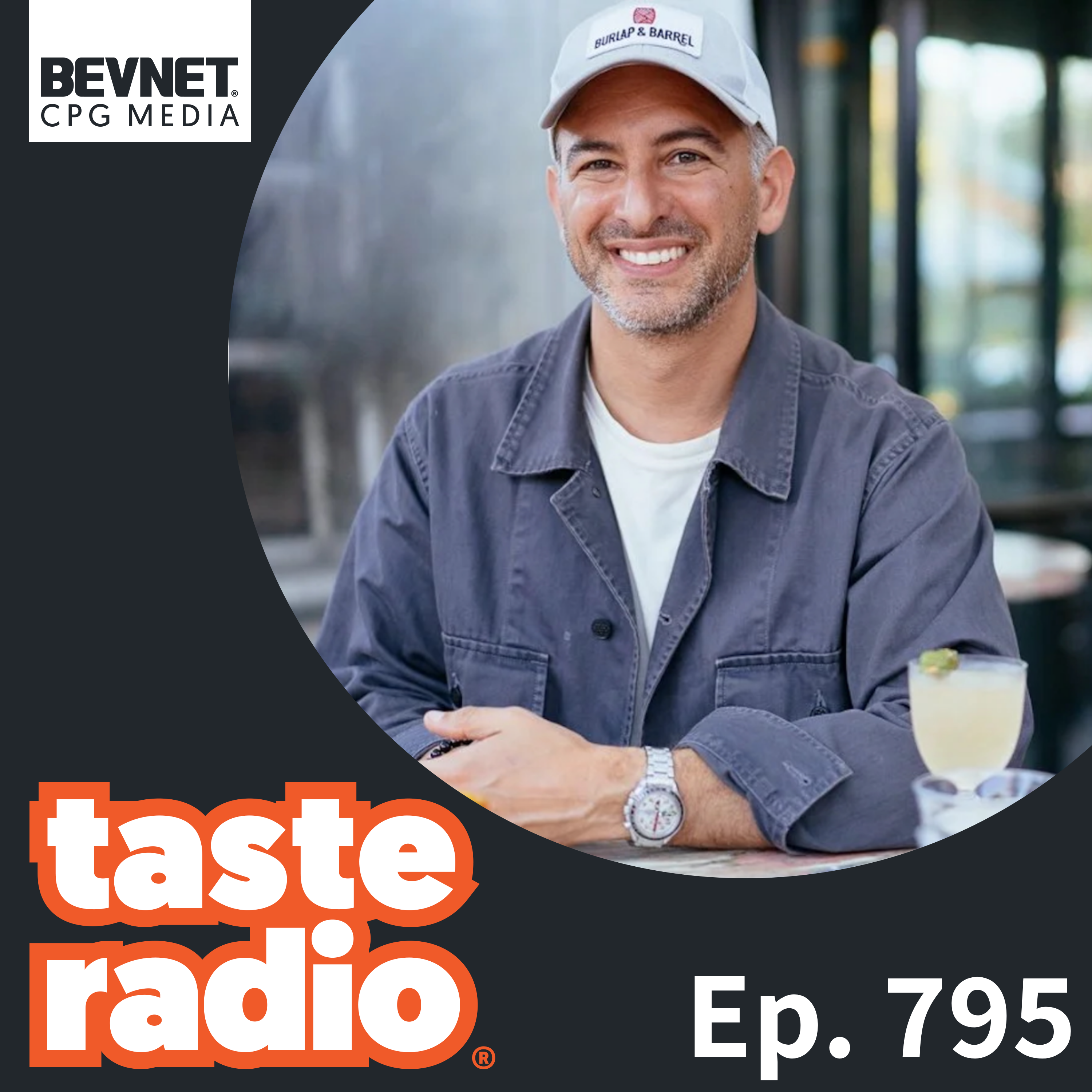
Hey folks, it's Ray with Taste Radio right now. I am honored to be sitting down with Amy Taylor, who is the CEO of Zevia. Amy, it's great to see you. It's great to see you, Ray. Thanks for having me. Where are you based, Amy? We're based in la. Okay. I personally live in la. Our offices are in LA and we're kind of spread about the country close to the consumer and customer as it were.
Nice. You've been in LA for some time, haven't you? Yeah, you know, back and forth, but largely in LA since 2002, I spent 20 years at Red Bull. I was the chief marketing officer and president when I left in 2020. So, uh, that US headquarters is here in la so I've been a local for a while. You know, when you think about this move to Zevia, how did your experience at Red Bull prepare you to lead the company?
There's many things that are very different between Zevia and Red Bull, both as brands, as target consumers, as the history, the timing, the size, all that. But what's similar and what prepared me in a way is first of all just focus on brand, like relentless focus on brand, understanding the power of differentiation and continuing to execute with consistency.
I learned that at Red Bull and we're seeking to do that here at Zevia in a, in a different situation. But I think more importantly, when I started at Red Bull in 1999. It was really clear to me that Red Bull was kind of lightning in a bottle for Gen X. I mean, it was just a perfect product for Gen X, like people burning the candle at both ends, et cetera, et cetera, and frankly, not really reading the label of what they're drinking.
And similarly, Zevia is like right on time for the consumer of today and tomorrow, right now. Whether it's like a millennial parent or somebody who's just trying to do a little bit better for their health or really truly health focused folks across generations. So it's so timely and I'm sure today we'll talk about why our product portfolio is so timely.
But that's another similarity is being kind of right on time for the consumer of, of today and tomorrow in this moment, I think folks listening probably have some preconceived notions about zevia. The question I think most of them have right now is, give me a reason to drink it. So what would be your ten second pitch, Amy?
No, I got you on that. So if you want a tasty treat and you don't want any of the stuff that most of us are trying to avoid, there's no simpler and better tasting solution than zevia. And the reason I say it's that simple is like there has been this tension within the category of carbonated soft drinks since the beginning.
The tension is between health and taste, and you've always had to pick one. Growing up I had to pick one. Do I pick, you know, sugar? Or do I taste what maybe I think is better for me, which is no sugar? And then come down, find out that maybe artificial ingredients aren't an awesome way to navigate around that health choice.
And so what seemed to be impossible was to put a product on the market without sugar that was naturally sweetened, that actually tastes good. And that's sort of the hack that is z. So given the fact that so many, I mean, it's really a macro trend that's here to stay, are moving away from sugar and we have a great tasting product with no sugar and none of the fake stuff.
It's the simplest promise to somebody who's trying to do just a little bit better is that, Hey, this stuff tastes great. It's relevant across multiple usage occasions. Every member of your family can drink it and there's nothing. You have to think twice about it. That becomes some sort of a limiter on your consumption.
I think right at the center of powerful brands is trust, and we have a lot to offer in terms of trust. I recall that being essentially the vision for Zevia when the brand launched and the brand itself has evolved, has that vision evolved? Was it always, you know, let's do better for people who want to drink better?
You know, I think the market around Zevia has changed a ton. So therefore, yeah, I think there's been some evolution in the vision of how to solve problems for a broader part of the population. So given all the change in, in the category, the broader carbonated soft drinks category, something that has become increasingly powerful about our business is that we're an accessible and affordable price point for people trying to make better for you products.
So I think as a society and as an industry, do a great job of making better for you products for wealthy folks. And frankly, while that may super serve a given population, it doesn't actually move the needle in the broader health profile of the country. But like if a family moves from traditional soft drinks to Zevia.
They can cut their sugar in half with just that one move. But if you're gonna try to do that, you gotta be able to afford the product, to stock it in your fridge, to put a 12 pack in the fridge to put a variety pack in the back of the truck for, you know, a kid's birthday party or tailgating, right? And that affordability and accessibility, having the health profile of sparkling water.
But a price point closer to true soda versus some of the functional competitors that we play against now is really critical. And the other thing that's changed, right? 'cause I know you are deep in the beverage world, so you're gonna know kind of our early stage versus maybe today there is nothing more important in beverage and especially soda than taste.
And taste is the number one driver of the category. Zevia has evolved a lot over the last 15 to 18 years, but especially in this last year, and with the pipeline of innovation coming now because we've had a breakthrough in what I call a more sugar like taste experience. We can talk about this in as much or as little detail as you'd like, but you know, Stevia is fairly well known now as.
Plant, it's, you know, cane sugar's a plant. Stevie is a plant. Stevie just happens to be a plant that can provide sweetness, that sugar like taste, experience without spiking the glycemic index, without the calories, et cetera. But the key is blending that with other natural flavors to give a rich taste without aftertaste.
And that's where we've landed now in the new profile. So we're really proud of that and we both invite, you know, rejectors of traditional soda to come try us for the first time. We invite non soda folks to consider Zevia as like a solution to the taste fatigue that comes with sparkling water all the time.
And we also invite laps users that maybe tried us 10 years ago to come back in and have a new experience with this brand. So we're really proud of what's happening right now in the portfolio, but also on the brand. An observer of the beverage industry might say, okay, well that's all well and good, but, and I'm gonna needle you here, Amy.
Yeah, let's do it. It's not my intention to do it, but just because I know someone in our audience would say, Hey Ray, you have to have to ask this question. Why is it taking this long for taste to align with the vision for Zevia? That's a great question. I mean, first, let's be clear. For a long time we've had a really passionate, loyal audience that loves the taste of Zevia.
You know, Zevia was originally invented by someone who was like addicted to Diet Cola and wanted to create a solution for that with natural ingredients, and they did that and they came up with Zevia. The taste has evolved a lot since then, but for many, many, many consumers, they've loved their zevia exactly as it is, and we've had very high repeat rates and loyalty rates as a result.
But I think it's a fair question and I think it actually prompts really great context as well. So Stevia started showing up in beverage per FDA Greenlight in 2008, and even though 2016 is the buzzy year, everybody's talking about right now, 2008 still is like yesterday, right? So in terms of supply availability and the evolution of using different molecules within the Stevia leaf to apply that for taste purposes, it's evolved.
We're just getting better at it, and I, when I say we, I mean Industrywide food and beverage are getting better at it. Now. I'm a bit biased, but I happen to think we're the best at it. We're getting a little bit technical, but we don't have any binding agents in our product today. Our product is clear, it has fewer ingredients than any soda on the market, and I think these are some of kind of the proof points of how far we've come and understanding how to leverage this very simple plant to provide a great sweet taste to satisfy that soda craving that, you know, 90% plus of American assholes have.
So that's how I would frame it, is this is just about progress. Sort of aligning what the consumer expects with, you know, the product that we provide. And what's cool is we've always had kind of the classic soda flavors, Cola ginger ale. Recently our big hit creamy root beer over the last three or four years.
And those are all in classic soda flavors where the consumer kind of has a certain expectation of what those products would taste like. And initially, Zvi was a little bit of a substitute for what they were accustomed to. We continue to super serve folks that want those classic soda flavors, and we're improving taste across those as well and innovating in that space.
But where a lot of our growth is coming from now is more in this light, fruity, and creamy space where modern soda's really been going, and that has unlocked an innovation pipeline for us. With a fantastic taste profile, something that I think is really surprising and delighting the consumer the first time they try it.
So two things. One is our baseline taste improvement are impacting our classic flavors and how they compete. And then our innovation pipeline, because of this unlock in a more sugar like taste experience, has opened up all kinds of flavor platforms that previously we wouldn't have been able to play within.
I imagine an inflection point for the category as a whole has been the adoption of an embrace of Better for You sodas, and that's happened over the last five years or so. That's right. And when I think about Z, it's almost like you guys were way ahead of the game, right? Yeah. In the head. You were offering something that was an alternative to Legacy Sodas in a better for You version.
But has this general acceptance of soda in better form really been a momentum driver for Xavier? Has it given you an opportunity to say to consumers, Hey, give us a second chance if you've already tried this once, or to younger consumers, we know people have been railing against soda forever. Here's a better version.
Here's a soda for your generation. Yeah. You are hired as a copywriter. Yeah. No, I think you frame that. I mean, I, I'm not just saying it. I think you frame that quite well. So for a long time we were the only soda solution for a huge population, frankly, that just rejected traditional sodas. But you and I both know, they shopped in the natural channel and they had a pretty strict basket in terms of, you know what else they're buying, right?
These are like really natural foods. People, really natural foods shoppers, but increasingly, and I'll talk about the category evolution and how that's impacted us. When I first joined CVA in 20 21, 1 of my striking observations was that if I looked at basket data and mainstream grocery. Folks put Zevia in their basket, also had Doritos and Oreos and full sugar energy drinks.
And, and, and, and my observation just very simple, you know, like insights to action kind of thing, is these are just regular folks trying to do a little bit better. We shouldn't just do cross merchandising with kale chips. You know what I'm saying? Mm-hmm. Like this is, you know, your average North American trying to do a little bit better by their whole family.
And so upon this insight, we thought, gosh, we've got a lot of work to do to kind of mainstream this brand, to invite kinda your average consumer into a new version of a soda habit. And then what happened, which has been tremendous in terms of like, let's call it category tailwinds, is brands came from adjacent categories, adjacent functional categories in the kombucha.
Cold box being purchased by the produce buyer in grocery, right? And started running into like the Venn diagram of our space. And what has emerged is the new category. People call it better for you Soda. They call it natural soda. You know, Walmart calls it modern soda. And that has been tremendous because other brands are spending hundreds of millions of dollars seating with the consumer that it's possible the soda could be better for you.
And here shows up. Zevia in that same shelf set tastes better at a more affordable price point, relevant across usage occasions, and a longstanding foundation of trust from a core consumer, which is that natural, uh, consumer with a higher standard, if you will, for ingredients. So the idea that this is mainstreaming presents a tremendous growth opportunity for Zevia to move from niche to the mainstream, to move from four or 5% of household penetration.
To eight, to 10, to 15 to 20 and beyond. I don't know that 80% of American households are gonna convert to a natural soda, but we got a long way to go before we have to worry about if that's a realistic ambition. So we're really excited about the investments in the category, the, the distribution that that has unlocked the visibility and the attention on the category and the investments to communicate to the consumer that this is a very real possibility that better tasting soda can also be better for you.
I am glad you touched on retail channels because there was a time when I never thought I would see Zevia in Walmart. You know, I, I just expected to see Zevia at your Whole Foods. At Sprouts. At Sprouts. Yeah. Sell plenty of it. You'd sell plenty of Zevia in those stores. Sure. But that's a good business. Yeah.
Walmart, target. However, I would've thought the mainstream consumer would've been like, this is just not a brand for us. We love our Pepsi, we love our Coke, we love our Mountain Dew, Sprite, et cetera. But Walmart's been a huge. Asset, or at least a great partner to ZVA and helped accelerate its growth in recent years.
Talk about how that partnership unfolded and what it's meant to your growth strategy. That's, um, a meaningful one to us because I, I think about one of our jobs, like I'm a little bit of a rising tide floats all boats person. And while I'm a fierce competitor, I also think many of us can win, especially if we're working smarter.
And so therefore, I believe, and this is nerdy, but in inside based selling and category management. So in 2023, early 2024, we were just sharing with multiple retailers, including Walmart, like, Hey, your produce buyer is buying one of these products that we believe to be relevant. Your sparkling water buyer is buying another one.
Your craft soda buyer, whatever that is, is buying us. And as a result, you have similar products that super serve a very desirable, younger, affluent shopper, spread all around your store, and therefore you're not a destination for them. You're not, so let's consider creating a set. That becomes a destination for that very desirable shopper.
And I'm sure we weren't the only ones serving up that insight. But what I was so impressed about with the world's largest retailer is how fast they moved. So in November of 2024, they ripped off the bandaid. They consolidated a bunch of cats and dog brands and kind of reorganized something that had been a rather cluttered shelf, very young buyer doing this really impressive individual and was very well empowered by again, this giant organization.
It was very cool to see how fast they could move. They won up us. We were selling it to them as a Better For You soda set and they branded it modern soda. And I, I think it's a tremendous bellwether of where we're headed. It's brave of them to name this modern soda. What does that say about the non-modern stuff down the aisle?
Mm-hmm. And so what we've been able to do together as a category is super serve a very desirable shopper. And we are an anchor to that set because we are the affordable option. We are the like multi-pack take home brand in a sea of singles. And so we've been a really important brand and Walmart obviously a very important partner for us and it helps us reach our mission.
'cause if we're gonna impact. Global health, starting with North America, we've gotta be at arm's reach or 10 miles down the road of every American household and not just sold at high price points in niche channels. So it's really a breakthrough, but it's also a really nice kind of indicator potentially for other retailers in terms of how they're gonna treat the set and you're seeing them starting to go that way.
You've mentioned affordability a number of times, and I know that's an attractive element of your brand for a retail buyer, particularly at Walmart. But were there other aspects of the brand that were really eye-opening and eye-catching for that buyer? How did you enhance the brand in his or her eyes?
We all know that avoidance of sugar is a macro trend, but what's increasingly important, especially for a younger shopper and this young buyer with like really an insights orientation and ear to the ground, even with, you know, his peer set right and his friends, but is the avoidance of artificial ingredients.
Also a clean label that one can understand. And we talked earlier about being a trusted brand, like trust being so central and as the brand with fewer ingredients than any other soda on the market. And we're actually, the liquid is actually clear. We have no artificial colors. And again, none of our competitors can say this.
That component of our positioning. That like foundation of trust was really important and distinctive. And that's also Ray been the inspiration for our brand packaging enhancements. So we're coming out with new design to communicate far more overtly some of those points of distinction, but I think that was important to Walmart where affordable.
We're sold in a multi-pack. We have great variety right out of the gates. We have established super popular flavors. And then critically every new flavor that we've brought and every new variety pack that we've brought to Walmart has outperformed the last. So now we've kind of got a trust relationship based on the efficacy of our innovation as well.
So roll all that together with the distinctiveness that we have in ingredients panel, and then the fact that we taste great and it's a really strong fit for the Walmart shopper. I can't recall when Zevia did its brand refresh, but it feels like it speaks to a modern shopper and a modern consumer who's familiar with better for use sodas with functional sodas.
I think when I think about the Zevia, the past. I felt a bit more technical, a bit more masculine in some ways. How did you think about that rebrand, or how did that rebrand unfold, and what parts of it were really critical to Zevia's growth strategy as it is today? I think my answer to this question is going to reinforce the point you made earlier about how much all of this has changed and the adaptation that has been required of our brand.
Because the reality is, Ray, we've actually, as we speak now, are rolling out a second rebrand. Across five years, which sounds crazy. And look, I'm a former CMO, so it sounds crazy, but the first one, to your point, modernized the brand. I think it made it more mainstream in its appeal, clean, premium, and kind of justifying the price points a few cents per fluid ounce, more than the Cokes and the Pepsis of the world as it sat in the mainstream soda set or a craft soda aisle.
Increasingly. The consumer needs to know exactly why ZVS, some of the questions you've asked me today, and based upon some research that we did with our target consumer around the proposition that we have, the concept, which is very appealing, around zero sugar. Yes, that's clear, great taste. Taste is the number one driver of the category, but also no fake ingredients, no artificial colors, et cetera.
The new design looks delicious. And is very clear on the reasons to believe on the why Zevia. So the new, the one that I've been drinking today is, is an example of our enhancement on the packaging that's forthcoming. This is starting to roll in market now. Strawberries and cream debuted at Kroger in Q4 of last year and is running nationwide forthcoming, but this is like the soda made better headline that you're gonna see across the market with this really strong green brand block.
When singles sit side by side with multiple flavors and then critically across the rim, zero sugar, zero fake colors, zero fake sweeteners. And so our packaging's gonna work a lot harder for us. It's gonna be very overt about what we're about. It's gonna stand out among the evolving better for you or modern soda, and it's going to tell the consumer why to buy Zevia, which I think helps a lot with kind of the origin of our conversation We're talking about.
Folks in the natural channel know who we are and why Zevia. But as we expand into Walmart, et cetera, et cetera, into club and introduce ourselves to new consumers for the first time, being super clear on the whys is critical. And that's been the inspiration for the second evolution of the pack design. In addition to the new packaging, you have a big campaign that you're rolling out that's called xox, which I feel like I understand what that is, but, uh, what is it and why is it so important to 2026 and beyond?
Sure. I mean, you know, detox. I'm glad to hear you kind of know what it is because hopefully it's intuitive. Like we consider ourselves to be focusing on being radically real and support those that are seeking to be radically real. And if we're gonna be real about New Year's resolution, so often they fail.
And so we're just offering somebody a lot. Simpler solution than some of the various like convoluted versions of a plan to better themselves that folks come up with. And so detox is our latest campaign that encourages consumers to detox from artificial soda by replacing it with better forze. And we launched it in January.
Had a moment when obviously consumers are wrestling with resolutions and trying to do just a little bit better. The campaign insights rooted in the reality that so many resolutions fail, like I said, and the campaign takes quitting resolutions and kind of turns it on its head to quit something toxic and swap it with something better.
So we did a lot of fun things, for example, in Atlanta recently. Around the Peach Bowl, we had a garbage soda cleanup, street team cleaning up garbage soda, but also of course sampling zevia in and around the Peach Bowl footprint. And we have a number of similar sampling initiatives along with our partner called Lifetime Fitness, whether it's their Miami Marathon or Diplo's Run Club in Phoenix.
So we'll continue to show up and challenge folks to take the detox, uh uh, with detox with Z and hopefully we're gonna get a lot of folks agreeing. This is just an amazing taste and it's hard to believe there's no sugar and no artificial ingredients in this product in the past, for this time of year, January.
That is the, I guess the word I'd use is restriction. People wanted or heard from others that they should restrict. One thing or the other, particularly when it comes to food and beverage. Mm-hmm. And nowadays, people are embracing moderation. And I think brands and companies are responding to that and how they market their products.
And you said it before, you know Zevia is a brand that could fit in a shopping cart with Doritos and Oreos and whatnot, but what has been more effective for the brand? Is it. This is a better for you option that fits into your new everyday consumption habits. Or is it something where your messaging is continue to eat and drink whatever you like, but incorporate zevia as a way to better yourself and better your family's consumption habits.
I love this question because it is ripped out of in-home research focus groups and just a dialogue around like the current zeitgeist. And honestly, Ray the enemy is perfection. The enemy is perfection. We are not here to run alongside folks and lecture them about their broader diet and tell them how much better they can do.
We just wanna put a cold zevia in their hand at different day parts and have 'em taste something really, really yummy, and they don't have to feel bad about drinking it. And if that means that they're saving calories and sugar for a brownie after dinner, cool. If it means it's a part of a very strict or even medically directed diet, also cool.
Either way, they're bettering their health. The idea that one would not have to make sacrifices to do that is really central because I think it's, I mean, I love the study of generations. If you look at, you know, boomers, the way they talked about health and thought about what it means to be disciplined and make better health choices, and then look at Gen X and then move on to millennials.
The heart that I have for millennials is that there's so much coming at 'em, telling them all the ways that they can do better, whether it's through social media or influencers or recent conversations, kind of government on down about what does better for you mean, and what does process mean and what does clean mean?
And for us, it's just like, Hey, if you just switch from regular soda to Zevia, you're already making a huge step change. And beyond that, like. Indulge a little bit, we can enable that. So yeah, enemy is the perfection and Zevia is an amazing sweet treat that you don't have to think twice about enjoying through the day.
I think that's a very important question. And I also, I just hope that soda is so often associated with joy and I don't think it should be associated with. I wanna continue to associate it with joy and sort of these little unlocks about saying no thanks to perfection. And this sort of like almost unhealthy version of discipline is really at the center of like a joyful and and twinkle in the eye campaign like xox or more that we have coming this summer as well.
Well, I think that speaks to whether you position Zevia as a brand for modern consumers, for younger consumers. Gen Z, gen Alpha. Versus older generations, because younger folks, I don't think they really think about the traditional brands, Coke and Pepsi as their own. And so that certainly will affect how your marketing plays out.
And you, again, with all the experience that you have. Now these new forms of content creation and social media have made it even more of a challenge, I think, to figure out how to speak to people and how to speak to folks in a way that's very current. I mean, things change literally day to day, so.
Authenticity and making it feel like you're not forcing the brand on folks and not talking to 'em in a way that's canned can be challenging. How do you guys do it? How do you speak to a younger audience in a way that is truly authentic and done so in a way that matters to them? I couldn't agree more.
Don't lecture the consumer. Now I'm lecturing. I'm lecturing right now the irony, Amy, but hey marketers, I'm talking to you. One of the reasons we were so specific about what we put on our package is that we're gonna say what we are on our package. And for an interested consumer to go deeper, they can double click into our website.
But beyond that, the most credible form of communication is others talking about us. Saying that they love the taste of Zevia, talking about their favorite flavor being peaches and cream, or creamy root beer or Cherry Cola, or all the way down to the niche ones, down the tail. There's a ton of variety and there's kind of something for everyone and rooted in the idea that word of mouth is the most credible form of communication versus advertising or whatever else is our strategy.
We work with a ton of not just formalized and structured and paid influencers, but just opinion leaders in different circles that love zevia and talk about it authentically, and whether that person is a dietician or nutritionist, which is oftentimes why so many doctors recommend Zevia to patients that need to cut back on sugar.
Because we have invested in building relationships across the dietician and nutritionist community for the last. 10 years. But in addition to those individuals, even folks all the way up to a-list, celebrities that love Zevia and authentically are drinking it backstage. I mean, you think of somebody like a rising star like Nikki Glaser who just hosted for the second time and I thought crushed it on the Golden Globes.
She's a huge Zevia fan. She drinks a ton of ginger root beer. That's her flavor. If you follow her on Instagram, you can see can shots all the time. This is where the magic happened, and honestly, I learned this in my old job. There is nothing more important than enabling and fueling and supporting and building relationships with authentic lovers of your.
For us, whether it's Nikki Glaser or Little John or Justin Bieber, or nutritionists and dieticians are passionate, gravel and off-road mountain bikers or moms in moms groups. Or formalized influencers. These are the word of mouth networks that help us build a long-term play. To interrupt the CSD trend, you know, diet and zero sodas are still growing and growing quite healthfully actually.
It's just a reflection of the fact that folks are trying to avoid sugar, but as the population that's also trying to seek out. Clean ingredients, avoid artificial ingredients and are willing to pay a little bit more in order to do so as they age into all the kind of money and the decision making set.
This is a sea change, and I had somebody say to me the other day, I can picture a world even if it's in 15 years, where I'm standing in the soda aisle and I'm looking up and down the giant aisle, and the brands that I'm looking at are what's currently in modern soda. I think as a marketer, while it's very tempting to chase kind of pop culture and high spend marketing as a marketer, we're playing the long game to seed really convinced users and unlock them to influence their circles, be it through social or on the ground at events like some of the ones that I mentioned earlier, through sampling or through word of mouth and networks like the dieticians and nutritionists.
And so this is just a little bit about what I believe on human nature. Let's be super crystal clear on our packaging. And on our website for the highly informed consumer about who we are and what we offer from our product perspective. And let's unlock word of mouth and talk about what it means to be radically real and everything else that we do in marketing.
I spoke to a founder of an early stage company that's growing pretty quickly about how they craft their marketing strategy, and they said everything starts with how consumers respond to our product, how they respond to our brand, and they use user generated content to inform. That strategy and, and that kind of communication, how much does it matter to Zevia?
How much does what you hear from consumers on social or otherwise influence and impact your overall marketing strategy? I think whomever this is that you were speaking with is tremendously humble and wise because I think it's one thing to sort of brief into classic strategy or brief into a classic kind of creative entity and expect them to come back with pithy advertising that may or may not go viral in order to get you greater ROI on your content.
Yes. Sometimes that can be very effective. But the greatest way to start to drift away from the consumer and lose touch with the zeitgeist is to fail to do exactly what you're talking about. Let's listen for those that really love ZVA, that consider it to be like the indie rock band that they discovered and they're telling their friends about.
Like everybody loves to be the one that found something in some non-corporate way, and that's true increasingly in beverage. I don't know if you agree with me there, but I think this, I discovered this verse and this was my jam. Mm-hmm. And share it with my friends is really important. So I'll give you a quick example.
Here in LA just down the street are a couple of creators that do custom clothing and custom gear, and they do it a little bit through the lens of sustainability. Like, Hey, let's not go manufacture and buy a bunch of new stuff and fill landfills. Let's repurpose. And they're creative. Wackadoos, you know, they are really interesting characters.
They're two entrepreneurs that pulled together their pennies and opened a little shop on Melrose and Super serve kind of these, the makers and the creators that are really into custom and DIY clothing. They love Zevia. Both founders have a different flavor, literally the can tattooed on their arm. And when I first learned about them, I'm like, I gotta go talk to these folks.
So I literally just walked into their shop, you know, they're not even open like, you know, normal hours. I found out when they were open, I think I hi 'em on, you know, dms on Instagram and I just went in to learn from them. I'm like, how'd you first find out about zevia? Why do you love it? Why do you love it more than this brand or this brand or this banner?
If like ZEO is a person, how would you describe it? If you were in my job, what would you do? Which, you know, I'm not asking them to talk to me about the supply chain. I wanted them to like have a vision for how Zevia grows and kind of takes over the world. That that others could find out about this indie rock band that they had discovered first.
And we took so much inspiration from that exchange. They ended up like making t-shirts for my staff and they come into the office and we hook 'em up for their events. And this is just one example, this custom land la. But like this is in essence how you unlock connectivity within the zeitgeist. I mean, we did this at Red Bull, remember it took time.
I started out that brand in 1999. Lovely to work at a private company, by the way. You have a little more time. But we're doing this Xavier, you know, we're putting down roots. We're building relationships in communities and we're doing so with folks that have a great ability to reflect this idea of being radically real.
'cause that's really who we are. Perfection again, is the enemy. Let's keep it real and it's all, let's do a little bit better together. I think you hinted at this, Amy, that your job, while fun and exciting and relevant is tough. This is not an easy industry beverage, probably the toughest of the CPG industries.
How are you managing the stresses of the job, the challenges, the opportunities, the excitement that you see every single day? Yeah, that's very kind of you to ask. I think at the center of my approach to leadership through what was effectively a turnaround, was to assemble folks that were willing to.
Leverage what they know, but also suspend their assumptions. Come into this organization, learn the state of affairs through every function. Study the brand and the consumer to the question you had earlier, how the brand is showing up today, how the brand could show up based on where we see green shoots of passion from consumers, and then build the story from there.
So what's my role in all of that? It's to attract and retain the right people for the job that are like, we call them courageous challengers and tenacious builders. Like assemble a team of folks that are kind of up to the task and energized by both a turnaround and then a drive growth story. Luckily, the turnarounds behind us and we're in the drive growth.
Chapter, and I'm proud of that. But my job is to attract, retain, and maximize those individuals, and then also to ask them the right questions to make sure that I'm challenging where we go from here. So the reason I frame it that way is that it's not my job to answer all the hard questions. It's not my job to unlock the strategy.
I'm not the person closing the door with a pen and writing everything else myself. I am the convener, the leader is the convener. And then how are we gonna be successful in that? Well, hopefully it comes from a mix. Of confidence and humility. The humility to continue to listen, willingness to be wrong, to take some risks, to take the feedback, to empower the people that I've assembled versus, you know, telling them what to do otherwise, why to hire 'em, but then also the confidence to say, okay.
We've had enough discussion, we're making the decision and we're moving forward and here are the risks that we are going to take. And so that's kind of at the center of my journey, is this desire to show up as the right mix of humble and confident. But so, so central to that even working is the team both immediately under me and throughout the organization and Ray, we're a hundred people.
We're only a hundred people, so I'm just so proud of the idea that we've operated super lean and mean like a startup, even though we've been around for literally 18 years now. But with today's Zevia organization, we both kind of honored the founders as well as like modernized the brand and driven a tremendous amount of change.
And so now we're looking at our first year of being profitable. Of strong growth, of having survived all the changes in the category and now stepping in to be an anchor within the new category and to unlock the real potential for this brand. It doesn't come fast if you're playing the long game, but it's coming.
So I'm energized, as you can probably tell, it has been a very challenging five years now, but I'm energized because of where we are right now. I gotta tell you, Amy, I think the hiring team did a really good job as Zevia 'cause they found the right person, thank you, who has all the mixes going on in a really, really positive way and, and clearly one that's impacted the brand in a really positive way.
Thank you so much for taking the time to speak. I feel like I could. Sit down with you for another two hours and talk about, or at least pick your brain. Everything relates to your experience and and Zevia, but I know how busy you are and I really, really appreciate the time. And once again, I really appreciate you sitting down with me and sharing your lessons, insights, and experience with our audience.
Well Ray, first of all, um, it's really nice to talk to an expert. You know, your insights form questions that actually drive a real conversation, so that is a pleasure and thank you for the compliments. I will say the work's not done yet. We still got a lot of work to do. You know, ultimately we wanna be the number one choice for better free soda for people that are trying to have a treat at multiple.
Stay parts, multiple use educations and not have to think twice about whether or not it's good for 'em. So we got a long way to go before we're the number one choice. But man, it's really cool to see the category tailwinds, the momentum for the brand, increased marketing, increased distribution, and a pipeline of innovation that should surprise and delight the consumer.
So I think we're on the right track, but we still have a lot of work to do. So track along with us, stay tuned with us and I look forward to staying in touch. Absolutely. And I think you've convinced a few folks who may have been zevia. Uh, I'd say dissenters in the past. Skeptics, skeptics to consider the brand again, and I think that's a really good thing for the industry as a whole and certainly for the brand.
So thank you for that as well. Awesome. Thank you, Ray.