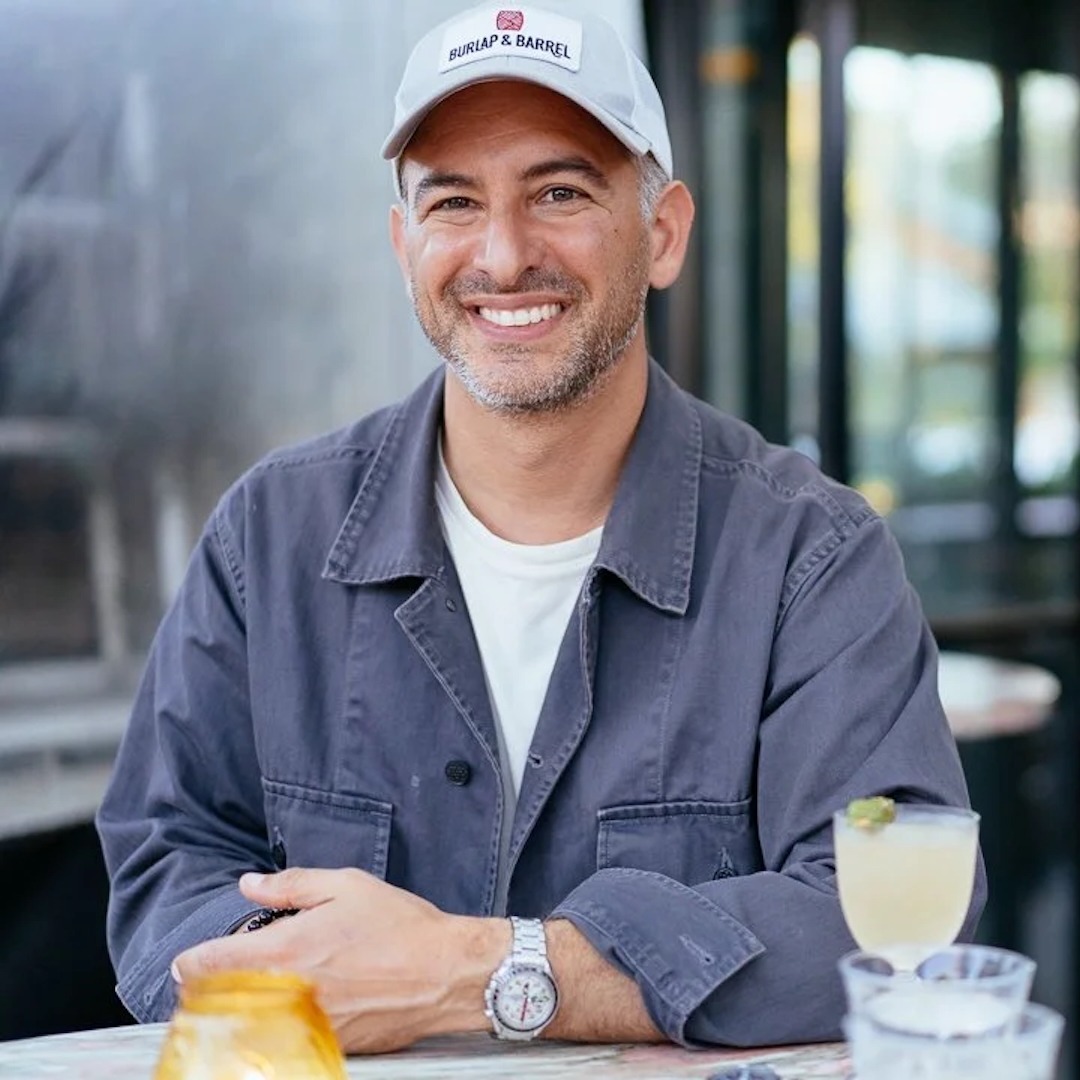
Hey folks, it's Ray with Taste Radio. Right now I'm supremely honored to be sitting down with Ori Zohar, who is the co-founder and Co- CEO of Burlap & Barrel. Ori. Great to see that. Really glad to be here. Thanks, Ray.
Yeah, we're here at the Winter Fancy Faire. The inaugural Winter Fancy Faire. which used to be called…The Winter Fancy food Show. Yes. A little different. It doesn't feel different though. It still feels really lively and fun and exciting. Yeah. There's lots of people exhibiting. There's lots of people eating. We also moved from Las Vegas to San Diego. Yes. Which personally, I think is an upgrade. I don't wanna offend any Vegas people, but it's, it's really lovely here.
The sun is shining. It's amazing. Yes. I mean, it's actually kinda hard to be inside the convention center right now 'cause it's so gorgeous outside. That's right. I asked you if you came in from New York, but you're based in la I'm based in la, yeah. Burlap and Barrel, we're a remote company. We're about 25 people.
Ethan, my co-founder and Co, CEO and business partner is out in New York and Queens in Jackson Heights. Incredible food neighborhood. Yes, and I, a year and a half ago, married a lady from LA and so we got married in the Brooklyn courthouse and then we made our way over to Los Angeles. So now we are.
Officially bicoastal. Nice. Jackson Heights. I've never actually been to Jackson Heights, but I've heard so many great things about the food scene out there. A lot of South Asian restaurants. Yeah, yeah, yeah. And also just like a plus for diversity. I think it's one of the most densely populated, like as many languages and cultures and everything.
So whatever you have in your mind. You can find that kind of food and there's amazing Tibetan food, you'll get momos to no end. Yep. There's basically any culture that you're thinking of, you'll find delicious, inexpensive versions of that food and so it's just, I'm very happy whenever I go out to stay with Ethan and visit there that we just, I just know that we're gonna eat really well.
Good barbershops too, from what I hear. I, I haven't gotten my hair cut there. I haven't had the pleasure yet, but, uh, maybe that's the next thing on my list. Well, the haircuts, they massage your head and they do kinds of really cool things. I guess I've been missing out on this part of Jackson Heights. No, I, I, I saw, I don't know, you know, sometimes when you're up late watching YouTube Yeah.
And you see like. I got my hair at a South Asian barber in Jackson Heights and yeah, you're absolutely right. That's something that I need to check off the list. Yeah, I'm sold. There you go. So Burlap and Barrel is a brand that I have seen in a lot of different places, and every time I come across your products, the first thing that comes to mind is quality.
Quality or specialty. But I think quality more than anything else. It just feels like a brand that is so specific in. What they're trying to deliver to consumers. From your sourcing to how you present yourself on shelf. To how you communicate with people. Everything feels really intentional. But let's back up for a second.
'cause I don't know if you thought you were gonna be a, uh, spice purveyor when you were 10 years old and, you know, thinking about what you're gonna do with your life. How did you get into this business? Yeah. Thank you for so much. And, and quality is exactly what we're going for and I'd love to, what we'll talk more about.
Why we got there and how we got there and all that stuff. Ethan and I have been friends for a very long time. I moved to New York, straight outta college. Ethan was there living in a small apartment in Chinatown over a, a tofu factory. He was cooking incredible meals and I was like, I don't know who this guy is, but I need to have a seat at the table.
And every he is cooking. He was also working in restaurants. I started hanging out at those restaurants too, and we became really good friends over kind of many, many shared meals and many late nights. We ended up starting, Ethan was working as a pastry chef at one of the restaurants, was making lots of ice cream every single day, different flavors for the menu.
He said, I wanna start an ice cream business. And everyone said, talk to Ori. He's our business friend. So I graduated from University of Maryland. I got a business degree as an undergrad. I was working in advertising at these, like I'd never been in a building that was open 24 hours a day and like had 50 floors and all that stuff.
But, so Ethan and I started talking and in the summer of 2010, we started an ice cream cart called Gorilla Ice Cream, GUE, like Gorilla insurgent. We were idealistic young guys, straight outta college, and we started making flavors inspired by political movements and revolutions from all around the world.
And we got both our ice cream cart and donated every penny that we had from the business back to the Street Vending Project, which was a street vendor advocacy group in New York. Oftentimes street vendors don't have the like legal. Knowledge or how to deal with all the American policy and requirements.
Anyway, the street vendors, they were that advocacy group for them. So over the summer 2010, we started this ice cream card. We pushed around the streets of New York. We set up at the Hester Street Faire. We set up at the South Street Seaport. We made a lot of ice cream flavors every single week, and we ended up donating around 5,000 bucks to the street vending project.
And it was our first kind of time working together, kind of combining Ethan's culinary skills with my business skills and, and seeing how that all worked together. And New York, a city that has ice cream on every single corner of the city. We were working on telling a story that connected with people about where these flavors came from, why we combine them together and doing something that was interesting and unique and different.
Fast forward to the end of that summer. And what year was this? This was in the summer of 2010. Okay. So Ethan, at the end of that summer had gotten into a master's degree in international development, moved to London, and from there he moved to Afghanistan and we'll bring him back into the story in a couple, in a couple years.
Mm-hmm. Um, I went to the dentist and the dentist was like, oh my God, what have you done? I had four cavities. Oh, that'll happen when you sell ice cream. Ice cream. Cream, ice cream business, man. But then I went and I was like, all right, I'm ready to do a kind of proper startup, quote, unquote, you can't hope we can hear the air quotes here.
And I went and started a venture backed FinTech company in San Francisco. I met some entrepreneurs that had started a business in Switzerland. They ended up giving us our initial funding to start this like easier, friendlier, more transparent mortgage brokerage in the us, which is where we started.
Nobody knows what a PR is. Nobody knows what points are. We were trying to create a kind of borrower friendly version of that. We spent four years, we raised $32 million. We spent more than $32 million. We were in this like grow fast at all costs model where we just had investors coming in and throwing money.
We had a series C that fell apart. The investors were waiting, trying to push us into bankruptcy. It was this really crazy Silicon Valley like rollercoaster ride. And by the end of it, we ended up selling it for 10% of what we had raised to some of our investors. And so I went on this crazy thing, learning what to do, but mostly honestly what not to do.
And that was right when Ethan, who had spent those same kind of four years in that time, he'd been working in Afghanistan, building schools and working over infrastructure projects. He'd worked in Jordan, the Doctors Without Borders, but he kind of came out of this non-profit world with two things. One was this wild cumin that grew in Northern Afghanistan that his chef buddies were like, oh my God, this is the best version of this cumin.
Can we buy this? And number two, a kind of frustration with the nonprofit world saying, Hey, I want to make real change. But we were writing grants. We just weren't moving at the right pace in the right way. We weren't really building the business in the way that he had imagined. And then he came out to San Francisco where I was living at the time, and I had been very disillusioned with the VC world of going through this like grow fast at all costs and just go, go, go and throw money at it and all that.
And that didn't feel like the right way to support our constituents or our customers. It didn't feel like the right way to build a long-term healthy business. And so that's right when we had kind of come back together and he said, I think I have our next business. And he then spent the next year or so visiting farmers to start saying, we knew we couldn't just build a business around cumin.
And so he ended up meeting a vertically integrated cardamon farmer in Guatemala. He ended up meeting an organic spice cooperative in Zanzibar, both farmers that we still work with today. And then he came back to San Francisco and we sat at this restaurant before service at Nopa, a great restaurant in San Francisco.
Mm-hmm. And I just watched the chefs fall out of their chairs. You know, trying these spices and we had this kind of like epiphany that I think Ethan was very well aware of at the time, but at least for me, it came into focus for the first time that chefs who had access to, they knew their cattle ranchers, they knew their produce farmers, they knew their cheese mongers, they knew their grain farmers, but spices was a total like black box of where it came from and what it was.
And so that's what really set us in motion to build the single origin spice company, which was really applying a lot of this direct trade, single origin values to the world of spices in this kind of comprehensive way for the first time. You know, entrepreneurs often see opportunities faster and more clearly than most folks.
The question I always ask founders is, how did you decide that you're going to invest behind that idea? It's one thing to have an idea. It's another thing to say, well, I'm going to invest my time, my money, my blood, sweat, and tears into doing something like this. What really drove you so. I think everyone thinks that like entrepreneurship is a combination of either a mad scientist or lightning striking with like innovation light bulb over the head.
Ethan, to his credit, comes from a family of entrepreneurs. I've also done this entrepreneur thing for, for decades and it's actually been a really good muscle to exercise. 'cause you start learning. What we saw with Braff and Barrel that I had never seen at any other company that I worked at was Pull. We saw this product market fit.
We saw chefs saying, I wanna buy this cumin, what else do you have for me? And so as Ethan in the first year started traveling around. Visiting farmers, sleeping at the farm, bringing back stuff in his suitcase and duffel bags. Mm-hmm. We were just selling it faster than we could bring it in, and so we had this really early kind of indication.
We were kind of testing it little bits at a time. So Ethan started traveling. We both started putting little bits of money in. And what ended up happening is because we were bootstrapped, we didn't have big VC money, we ended up just saying, how can we keep testing the like hypothesis that home cooks and really, but starting with chefs, we're ready for this new thing.
And so. What motivated us was we did see this new model. We did see this thing where we could kind of, it was like a win-win where farmers would get paid more. We would then cut out all these intermediaries that normally mark up prices, but don't often add value, or often quality goes down as they mix and mix and mix.
Mm-hmm. And so we just started testing it and what we saw is the chef were like, yep. What else you got every time we'd bring in a new spice and that kept giving us the courage and the kind of conviction that not only were there incredible spices that weren't making their way into the US, but also on the other side of it that they were customers.
And that's where chefs were the first ones that would buy something out of a unmarked, you know, brown paper bag. But that they were like, oh my God, yes. What else can we do? So we saw that there was opportunity and we said, let's keep opening this door and see how far it can go. Proof of concept is really important.
Getting that validation from chefs very important to say, okay, we're on the right track. When did you feel like you had a business, like an actual business? Was it in the first six months? Was it two years in? When did you feel like, okay, well this thing has legs, but in a way that is more than we can just sell this into restaurants, we can create a consumer brand?
So in the first year, Ethan was our r and d guy. Like he was setting up all the infrastructure for the business. At some point in his apartment in Jackson Heights. He had about a thousand kilos, over 2000 pounds of spices in his home. I would fly back from San Francisco and then I'd come home. And I would've to wash every single thing in my luggage.
Like it was just, uh, he was running a spice company, a little bit of a gray area out his living room. It probably smelled amazing in there, but yes, you probably could not walk home and not smell like cumin, cardamom, exactly. And a seed. All those kind of things. All the smells like a spice bizarre. Yeah, and so, so for the first year it really felt very touch and go very fragile.
And by default, all companies early on are very fragile. And I think the goal of entrepreneurs is to make your company less fragile. Anti-fragility is like, how do we take away risks and help it? So in the first year, it was all out of his apartment. He was going door to door, selling to chefs all around.
But what we started doing is we started building a website and people started buying and started moving. And there were these two moments. One, we got a tiny. Like two sentence write up in the New York Times, basically saying Burlap and Barrel is a company that exists. And then all of a sudden we just saw a slew of customers coming in.
Wow. New York Times was really influential, but for the first time, you start out and you're selling to like friends and family who are kind of doing you a favor buying from you. But for the first time we started building past that and we started having strangers buying our spices and literally Ethan was like stamping the spices and writing by hand and all that stuff.
So it felt really legitimizing that we had customers not only coming, but coming back and telling their friends and referring to it. And then we closed out our first year and I started looking at the financials and, and looking, and this sounds way more complicated than it was, but in our first year of existence we sold a hundred thousand dollars worth of spices.
And I was like, oh my God, this is a real business. Mm-hmm. Like this isn't just like a, so that was really strongly legitimizing. And we knew that. We saw both restaurants and chefs were coming to us and recommending us. That started legitimizing us to home cooks. 'cause we could go and say, look at all these chefs that you trust and love.
They're buying our spices. What about you home cook? Like the way that Nike works with athletes or whatever it is. But that was really strongly legitimizing. And so at the end of that first year, we had a really sweet, short but effective write up in the New York Times. And we also just saw that we brought in real revenue.
Like this wasn't an idea. The rubber was hitting the road and people were buying and coming back and buying more. And so that convinced me beyond anything that we had a lot more runway. We could, we could really expand this business. Did you have a contact at the time? Did someone help you get that writeup?
Yeah. So Ethan was kind of going around. Nobody does PR like founders. I think oftentimes they're subject matter expert founders that are just like, I just wanna tinker in the lab. Like, don't talk to me. Mm-hmm. But founders are the best salespeople. And what he very cleverly did was we set up Google alerts for all the writers that anybody writing.
We knew that Florence Fabricant was, was our rockstar writer. Mm-hmm. And so he just reached out through everybody that we knew and got to know other food writers and other journalists at the New York Times. And so we networked our way over to her and then she kind of, to her credit. It has done such a good job finding new companies and young companies and giving them the stage, and so it really was with some grit.
It was really not by shooting press releases off into the ether. It wasn't by hiring some fancy blue chip, expensive PR firm, which I know so many early stage companies do. It was around really like, like pounding the pavement, setting up Google alerts, reaching out to those writers, following them on Instagram and sending 'em messages, like all that stuff.
Yeah. And so it was really around that and, and then just taking the time and not treating them like in a transactional way, but really showing them that we're we're spice experts. We'd love to talk to you about it. We'd love for you to take a look at our business and what we do. And just by creating this kind of human relationship, it ended up really paying off.
Really nicely over the life of the company. I'm really glad I asked that question because I think some people might just say, oh, well yeah, this food writer for the New York Times, you know, fell over in the street and saw this jar of roll up and barrel, which clearly did not happen. You guys had to make that happen.
Yeah, a hundred thousand dollars is not a lot of money to start, but it is again, a proof of concept. It's a starting point for sure. But then where do you go from there? Just in general, like starting a company is a privilege, like the ability to forego, like in the first year, like I think Ethan and I were on some form of like unemployment.
I was doing a little consulting on the side, all that stuff. But we were also about a decade into our careers, and so we had saved up a little bit of money, so we were able to keep. Turning out our pockets. We went without salaries for the first two years. You didn't quit your day, you did quit your day jobs in the first year.
It was Ethan doing this full time and I was consulting and doing this and just helping where I could. Mm-hmm. It's, it's been a tough journey. 'cause I think in the first few years, like I think this is what a lot of entrepreneurs struggle with is like, let's say you wanna build a company. Let's say you wanna pay yourself $70,000 a year.
Sure. There were two of us for us to pay that the business had to pay 80, $85,000 a year. So how much revenue do we need to do to have. 85 times two, you know, 170 K leftover after we do. So it's like you're like, oh my God, I need to sell half a million dollars worth of spices. Best case scenario to even be able to afford a salary for myself.
And even then, wouldn't we be better off spending 180 5K back in the business or you know, whatever it is. And so that's where I think a lot of people underestimate. And we were lucky that we had Ethan's wife, like I had some savings, like all that. We just were kind of scraping behind the first few years.
It's such a good point, but one I think a lot of founders don't realize, which is you have to generate revenue and a lot of revenue. A lot of revenue. And I think a lot of people maybe, you know, we're at fault. The media, uh, in writing about how many companies raised money and like, look at this, this company raised $3 million or this, uh, company got $500,000 in seed capital or whatever.
But you know, the best way to raise money is to sell product, right? Totally. Totally. And you, and you need to do it for a while. There's no golden bullet. What we also learned is that everything we did like made the business like 5% better. And we're like, if we can do 20 of these, then our business will double.
And if we can do that again, but the lack of investor money, the lack of like real finances, made us also be a lot more clever and forced us to think about profitability. So instead of hiring an exporting agency. We realized that it was cheaper for us to fly out to the farmers. We had two 50 pound check bag allowance.
That's really my first sourcing trip with Ethan was we went to Zanzibar and I was like, oh, amazing. Ethan wants me to come to Zanzibar, like all this and that. I'm the business side. Ethan's the kind of product and all that. And he just wanted extra luggage allowance. So we, we filled two suitcases full of cinnamon and black peppercorns and nutmeg and cloves, and that's how we brought it back.
But we just realized that the plane ticket meant that we got to spend time with the farmers in person. 'cause farmers have been burned by foreigners coming in. Sure. Promising them the moon and the stars and then disappearing. So we got to go there, spend time with the farmers. And then we got to bring the product back that would would sell and then would offset the cost of that trip and give us enough money to do the next round.
And so in the first few years, it was really a lot of suitcase importing as we affectionately called it. Yep. But also we just tried to be really attentive to our audience and to be like, who? What do you want dear chef and home cooks? Who are you? And we found out that our best customers were women in their fifties and sixties that lived outside of major cities and like, because they were cooking three square meals a day.
They were eating really well. They knew how to cook. They've traveled and they didn't have local specialty stores nearby, and so they were ready to come in. We couldn't have started this business selling the grocery. We could only started this business selling be e-commerce through our website because we didn't have the money yet.
Brokers and distributors and all that craziness we started as an e-commerce business. But that kind of, those restraints forced us into creative solutions and forced us to become this like healthy, profitable business. I'm assuming you weren't doing Facebook ads and Google ads and things like that. I think my.
Understanding of the business and my exposure to the business was primarily through magazines like Food and Wine, all those food magazines out there. Again, developing relationships with those writers and making them aware not only of what you're doing, but. The story behind your business is really important is you're selling the story as much as yours, the spices.
How did you engender a good relationship, or how did you engender good relationships with with those writers, those bloggers, those people who were so influential in getting the word out? We keyed into something that was really important early on, which was that writers and also chefs at great. Michelin starred restaurants had no idea where spices come from.
And so these are curious people that wanna learn, that wanna be educated. And so we didn't come in here kicking down the door saying, here's our press release. Do you wanna write about us? Mm. We said, did you know that cinnamon is tree bark? And most of the people were like, no. We're like, I didn't know that.
We're like, how do pepper cords grow? And everyone was like, no, no idea. And it's the fruit of a climbing vine. They grow bunches like grapes. And so what we really got to do. Is we got to put our foot in the door through this kind of like educational approach and these people drank it up. Both journalists, both chefs, both writers, everybody all along and, and ultimately our home cooks too.
Baby peppercorn vines are incredibly cute and cinnamon. Like nobody understands why cinnamon sticks are tiny and it's 'cause it's from younger bark and it's from branches. And we bring in cinnamon sticks that. 10 times bigger. If you come down to our booth at the show, I'll show you. But the main point is that people didn't have a lot of awareness into like where this comes from.
So we came in as educators, we came in to open people's worlds about this world of spices that you have on your dining table, that you have like so often, so many of these blends that you cook with steak seasoning, especially now with the tariffs where we saw that. Turns out black pepper doesn't grow in America.
Turns out cinnamon doesn't grow in America. Turns out vanilla and saffron and all these other things. Oftentimes your dinner plate reflects a global ecosystem that is specialized and worked really, really hard to get all these ingredients over to have your dinner, and so you can shake this jar of spices and this steak seasoning or this, you know, cinnamon sugar or whatever you're using.
It's been a global adventure to get to your plate. What we were doing is unmasking that and bringing people a little closer to that, and people's curiosity just took them from there. Because we know so much about the rest of our kitchen, about our pantry, we go to the farmer's markets. We know all these other things.
But spices were this total black box, and by being able to like show people what was going into it, all of a sudden we saw people's eyes light up and their curiosity, and then we ended up benefiting as being the purveyors of that. So if you. Learned from us how Vietnamese cinnamon is really special. And turns out most Vietnamese cinnamon comes from Northern Vietnam, which is a Chinese variety, not the true Vietnamese variety.
We then became your trusted guides through this world of spices that is so full of deception and so full of, yeah, misdirects and all of that as it has been since the beginning of the spice world. And so we got to play this role of a guide and people came along with us for that, and that ended up being a really powerful tool to get into people's kitchens.
Trust. Very, very important. And let's circle back to quality. Yeah. 'cause you can be educators and say, Hey, this is where this comes from. Isn't this story really amazing? But at the end of the day, the quality is about the spice. It's about the dish you're making. And if you have two dishes and you're using burlap and barrel spices for one and one for another, you want to taste that difference.
When you talk about quality, what do you mean exactly? How do you differentiate between what you sell and what, say another specialty spice company might be selling? So there's broadly two problems in the spice world. One is farmers that are incentivized to cut corners and just like reduce cost, reduce cost because of all their partners and the buyers are like, I need this cheaper and cheaper and cheaper this year.
So it creates this incorrect incentive for farmers to be able to like cut costs wherever they can. The second problem is changing hands. So spices. On average chain chance 10 to 15 times they're treated like commodities. So if the market is low, my incentive is to keep spices in my warehouse, you know?
Can I pause there for a second? Spices are commodities though, aren't they? Spices are agricultural products. Okay. Right. Like if the more we think about spices, the way we think about produce, and they're nuts and bark and seed and fruit and leaves, the more we think about them as agricultural products or freshness matters.
The better the quality will be. And so what we really are doing is solving this problem in both ways where we work with these small holder specialty farmers that for generations have been growing incredible cinnamon and black pepper and cloves and sumac and everything. And we're buying it directly from them.
And so we had this problem where we don't have contracts with any of our farmers because they don't care. Like you try to get a Sri Lankan cinnamon farmer to like enforce a contract with you. Yeah. So we had to build everything based on trust. And so we do these big down payments, usually 50% during the harvest when farmers costs are the highest.
They know we mean business because we're there and financially showing up. At a moment where their costs are the highest, 'cause they're hiring staff and they're processing and all that stuff. And then we do the other 50% when the harvest is over and that's when we bring it in. So we buy spices in most cases once a year, aligned with the harvest.
That's when we get the highest quality and we don't want farmers to have to store it or you know, they wanna sell their best stuff when it's the freshest. And so that's what we do to kind of, you talk about quality, incredible farmers, super short, direct supply chains, all aligned around harvest and that's what we do.
And just one other. Philosophical or you know, framing, if it's helpful. We think about spices in three waves. People talk about coffee and waves. Yep. Wave One of Spice is a giant kind of commodity company, so you don't know where it's from. I once went into a store and country of origin was five countries on the peppercorns.
You know, like just, it's just coming in. Just mix it. Wherever we get the best price, just move it through. Yeah. Wave two is specialty space. Companies that are buying from smaller and better importers and we like it and we supply a bunch of those companies. But wave three is companies that are building the supply chains themselves.
And that's what we're going into. And that's what we think has to happen in order to get the highest quality and the freshest spices is to work directly with those small holder farmers, is to spend time on the farm, is to work with 'em, to bring in spices every single season. And we haven't cut any relationships with our partner farmers except for one where we had consistent quality issues.
But every other farmer we work. Really hard to not only grow with them, but also if we ever have, there's a bad harvest. They don't get us what we expected or whatever. Our partner farmers in Turkey sent us the wrong kind of time accidentally. Mm-hmm. We sold it and it was great, and we did a, a new limited edition launch of this really beautiful time and we marketed so instead of shoving it back to them and making them cover the cost or having to destroy it.
We used it as a marketing opportunity for our customers to get a very cool 17 variety of time that we call Taurus Mountain Time. Mm-hmm. We sold it for two years and then like we, we actually asked 'em for a second shipment at the end of it 'cause it was so good. But we just try to do these trust building really to show that what we're gonna show up, we're gonna be good long-term partners for them, and in return we become their favorite customer.
So we get the absolute best of what they grow and we get priority in a down year. We get the best quality of what they do, so we build these long-term relationships and it's been really meaningful since the last two years. We sent over a million dollars to our partner farmers all around the world, and so it went from Ethan and his backpack buying 20 kilos of cardamom at this guy Don Amil car.
That was like, just looking at this. Crazy American coming in that flew into the middle of, of rural Guatemala in Alta Vera P, and now we're his biggest customer. And so it's been really cool to watch that change over time. And you asked like what motivates it is we're a public benefit corporation, we're a social enterprise.
Our goal is always to buy more product from partner farmers at these premiums to the commodity market. And so we've been able to show up for our farmers every year and do that, and now we're, we're a meaningful force for them and they've grown alongside us. And so it's been really validating and really rewarding to build these long-term relationships.
Basically what you just said, I think I know the answer to my next question. Mm-hmm. But maybe I don't. Do you feel like you're selling. The brand as much as you are selling the spices. Yeah, so that's exactly right, and what we've seen is that when we work with home cooks. They come in, cinnamon is our bestseller.
Mm-hmm. We bring in this Vietnamese, we call it royal cinnamon because it used to be sold to the royal kingdom. The, the court in hu in Vietnam. That was a cinnamon that they grew for them. Um, we sell more of that than anything, but once people come in and try our cinnamon and say, oh my God, I had no idea that this is what cinnamon should taste like.
They're like, what else you got? Yeah. And so then we've earned their trust and that's why we've also expanded. We added a line of honeys with the Jane Goodall Institute. Shortly before Jane passed, which the world lost a massive icon, she had realized and connected the dots that how do we protect chimpanzee habitats by making sure that they don't get logged and how to make sure they don't get logged by making sure the people around them make a lot more money from the habitats being up than from cutting them down.
And so they started working with this beekeeping and kind of wild honey foraging group over there. And so now we buy and sell that honey in the us. And so all of a sudden you come in, you say, great, I got cinnamon, I got black pepper. We have an insane pomegranate molasses. We have three of these wild honeys from Western Tanzania.
And so that's been really, no business can exist off of one-time customers or one-off customers or all that. And so we, especially online, we have over a hundred spices. We import from over 30 countries. And so now people come in and they buy the brand because they trust us to bring in spices that are gonna change their conception of what those spices should taste like for all the reasons that we talked about.
But I would argue that I think most of our customers. Still may not know that cinnamon is tree bark, but they know this is the absolute best sentiment that that money can buy. And so that's how we've been building our business in the last few years. The other word I use at the top of our conversation is specialty.
And I think specialty can sometimes have a connotation that means for some people small. And fine. I think in some cases, like small might be true small in relation to some of the other really big brands out there, but you can have a pretty significant business as a specialty food brand. I mean, look, we're here at SFE right now and there's some pretty big businesses.
I feel like it also helps you to know who you're selling to. You talk about the home chefs, you talk about people who are willing to pay a premium for your products. That's a good thing, right? I think just being able to know who you are. Stay in that lane. You can do good for yourself and clearly you'll be doing good for your partners.
Yeah, and I'll tell you, like if you talk about people that are running businesses in other countries, they're so jealous that America is over 300 million people that like we as Americans can go in and you don't have to even sell to 10% of America. You don't even have to sell to 1% of America. You just can find your people who have a similar set of values and who are curious about what you're doing and build a.
Pretty meaningful business. I'm constantly surprised at the amount of business that I meet that are doing over a hundred million dollars a year. We are not one of them, but you're getting there that you've never heard of, you know, and so like I think America is this really massive, massive country that works with one currency and one trade system and all that, and that's been really lovely that you don't need to sell to everybody.
There's gonna be a lot of people that wanna buy a 99 cent jar of garlic powder. We will never be the provider for those people. But what we have been doing has been trying to get more fun and easier and more accessible. So just for example, in October we made a, I dunno, 400 pound batch of Royal cinnamon, hot chocolate, just a hot chocolate mix.
We just said, you don't even need to cook, just mix it with water or your favorite milk or non milk or milk alternative. Um, we sold through that in less than a week. We made a 1400 pound batch next. We sold through that in just a couple weeks. And so like there's a massive audience in the US We're, we're kind of blessed with that, and I think that people sometimes lose the specificity and the focus of their business by trying to appeal to everybody.
We started with really incredible chefs. We expand it to really incredible home cooks. We don't need to like get to the 99 cent, like we couldn't sell an empty jar of air for 99 cents at the grocery store shelf. And so we're, we're really not trying to find, we're, we're trying to better serve our audience and keep expanding there rather than trying to keep going more mass and mass and mass.
There's a role for that. We're not the company you come to for. Do you sell your products in Target or Walmart or places like that? No, we don't. So we've been actually working the other way around where we started with very small specialty independent stores who are always looking for new brands. People come in there trying to discover the next company.
They're really great partners. They don't demand too much, and the staff is jazzed about all the products in the store. Mm-hmm. And so we've been in, we're now in a couple thousand of those small, independent specialty. We're now trying to learn how to get into regional grocery stores. You know, think about like five to 40, you know, locations or whatever it is, and where they are, again, curated, thoughtful, and all that stuff.
Maybe in the future, we'll, we'll have opportunities with Target or Walmart or whatever it may be. But what we don't wanna do is kind of lose ourselves by trying to bring it to low cost or make, I don't know. We, we work with these specialty farmers. We pay them a premium. Our product is very important, not luxury.
But it's also like, I dunno that we could sell spice jars at $5 a jar either and still pay the farmers. We have a saying, we didn't make this up, but just like whenever you have really inexpensive food, somebody's paying the cost for it. Yeah. So it's either one of the providers is getting screwed or it's you from your health.
You thought you're getting cinnamon, you're getting filler, you know, with, with a little bit of cinnamon in there. And so we're really trying to kind of navigate that where we wanna be a premium brand. We don't wanna lose our reputation for quality, for farmer equity, for all the other things that we built our reputation on.
Because like you said, that's. That's why people buy us. That's why they come to us for the brand and for our reputation for quality. We don't wanna risk that. I heard a quote from Warren Buffet, now it's, he's in my feed these days, but he just said that oftentimes people will risk what they have and what they need.
To get something that they don't have and don't need, right? So like don't lose your good company trying to get to this mass market and all that stuff. We're just gonna keep building brick by brick. We're nine years old now. We've always been bootstrapped, and now we're getting more and more of a reputation industry for what we do, and we're so grateful for it.
The last thing we would wanna do would be to give that up. Seeking some like greater exposure in the world. And I think from a financial perspective, it would throw things off as well. I mean, route to market distribution, these things are very costly. Totally. And that's why we're being really careful and thoughtful about it.
I think a lot of companies that are running with investors and all that stuff, they have a mandate to grow as fast as they can. Or go out of business trying. We have a different mandate as a on social enterprise, doesn't it? Listen, I did it. It's super stressful and some people are, are magical. Audit it and that's the only environment that they exist in.
But it's, it's deeply stressful and investors invest in a lot of companies. They only need a few to succeed. You have only one company so you want your to succeed. But we instead are building around long-term partnerships and sustainable relationship with our partner farmers and building in a thoughtful way over time.
And so that's what drives our decision and for us. Profitability is the highest law of the land because then we can pay our partner farmers and we can pay our team and we can keep growing the tariffs through a whole wrench and all the process and all that stuff. Yeah. Which we navigated our way through, but it's in a counter way.
Actually, last year was one of our biggest growth years. Because I think it made people think about where their ingredients come from and what they cost. And everybody increased prices and we didn't. And so that's what we've been really trying to grow thoughtfully. And it's given us independence and flexibility to really kind of zig and zag and like find places in the market that we can be where people are really looking for a better solution.
How much of your business is D two C versus brick and mortar? So we're about 80% D two C. Okay. And we're about 20% wholesale, which includes retail, food, service, and bulk. And from the beginning, even when it was just me and Ethan, we had four lines of revenue. Mm-hmm. Which was e-commerce. It was food service, it was bulk, it was retail because for us, we're like, we don't care if you're a home cook trying to buy turmeric for your whatever, you're making a turmeric latte.
Or we even have Lush as a customer, the big mm-hmm. You know, soap. Sure. Yeah. And so they, they buy all their turmeric from us too. And so we just looked at it and we said, you know, our farmers don't care if Lush is buying it or a home cook. They just want us to buy more turmeric from them. Yeah. And so we've done that.
So we've always been open in all those ways. And now we're this business that can kind of work across all those different channels. And it's been actually. Quite a competitive advantage that you can sometimes find out about us because we're doing the spices in your favorite chip, or because your friend hosted you for Thanksgiving and then sent you home with a jar.
The business kind of works across all those ways, and that's been, everyone told us not to do that. Everyone told us only focus on one channel, only focus on a handful of spices, only do blends, and we kind of built our business in contrast to that and it serves us really well. We didn't know that it would work out, you know, at the time, but it's been really nice to give the business that flexibility.
Some people know bur up and barrel through brand collaborations. I mentioned before we hop in the mics. You guys work with Anjali's Cup, which is a, just fabulous brand. They make these incredible turmeric based elixirs. If you just want a, a regular everyday, pick me up. It's a great product or a great brand.
Mm-hmm. If you're not feeling great, you can take one of their little packets of turmeric. Elixir is so good, but you guys supply them with some of their spices for their products and that's right. It helps with their reputation. I think it, it helps with your reputation in that you're both high quality, trusted brands, but how, how do you determine who to work with and who's going to enhance your reputation as much as just selling them spices?
So this kind of solves a couple of problems for us. One is, is that product is excellent and, and listeners like, please check it out. Yeah. Anjali's Cup. We also buy it from her. And we were for a long time selling it on our site too. And so it helped us kind of expand our line up. In e-commerce, it's all about, everyone's like, what else you got?
Like, uh, my spice cabinet's full. What else you got? And so having these really great turmeric elixirs was, was phenomenal and gave our customers another thing and let them find out about her company and kind of grow there. We try to think about this in a couple of ways. One way is, is who's a company that's doing really interesting things that we feel like has similar values, similar product quality, working with farmers, sourcing in similar ways.
And we do that. And then the other way that we look at it is we also look for like people in the food industry that have big followings that don't have any products. So we work with Sowell Wiley and her husband Ham, who are great people in the food industry and restaurateurs and all of that. And they wanted to do a set of nineties nostalgia blends.
And so we have nothing hidden Ranch. We have a yoo taco blend, we have a, a pizza, everything, you know, pizza party seasoning. And so we've done a lot with them to also, like, they are people that, that create a lot of content and are super knowledgeable food people. But have never built a packaged good.
Mm-hmm. And so now we get to do something really awesome with them and they get to go to all their audience and be like, look, we made something that's freaking awesome and tastes delicious, and all of that. So we also work with collaborators that can hopefully bring new people into our orbit and that we can also extend what they do into a physical good.
That's the kind of manifestation of what they love to do and their ethos and their philosophy on food and all that. So we've done a lot of that, but we, we've tried to be really flexible and we also have our Spice Club, which is an annual subscription. It can be quarterly, but every quarter you get it's 50 bucks.
You get four full size yard spice plus a collaboration. And so we try to find up and coming brands that are building to where we can be their biggest customer, if they will incorporate our spices in some way, and then we get to introduce our whole audience to them and hopefully give 'em a really nice boost.
Steve Sando of Rancho Gordo did that for us. He bought 5,000 jars of cumin when that was an unfathomable amount of cumin for us to be able to pack. And he put us in his bean club. And so that really, and he didn't negotiate like he, he just treated us really well as a partner. And so that was a really meaningful for our business.
And so we tried to do that for other kind of younger entrepreneurs than us and put them on the map of our kind of rabid customer base. Who love spices, but is also looking for other things that incorporate spices in some way. So it served so many really beautiful functions for us as a company. And so we wanna keep doing collaborations, we wanna keep expanding the things.
We sell hot sauces, we sell granolas, we sell all kinds of other things, and we want our site to be a little bit of an unexpected destination where you don't know where you're gonna find on our site, but it's gonna be really special and up to our quality standards and with really strong entrepreneurs and socially minded product makers across the whole, the whole kind of ecosystem.
Or I'm gonna have to, uh, send a thank you letter and maybe a bottle of wine to Jennifer Cohen who connected us. She's been, or has been doing, uh, PR for the Specialty Food Association for years. And she sent me an email last week and she said, Hey, you should meet ORI at the, at the show. And I'm like, yeah, of course.
I'd love to talk to him. And, um, I didn't realize. How much I would enjoy this conversation. I love all the interviews that we do for Taste Radio, but this has been a really, really great conversation and one that I think our audience is gonna get a lot out of, which is the best kind of interview that we do.
So Ori, thank you so much for taking the time. I really appreciate it. Thank you for having me. It's been great. Thank you.