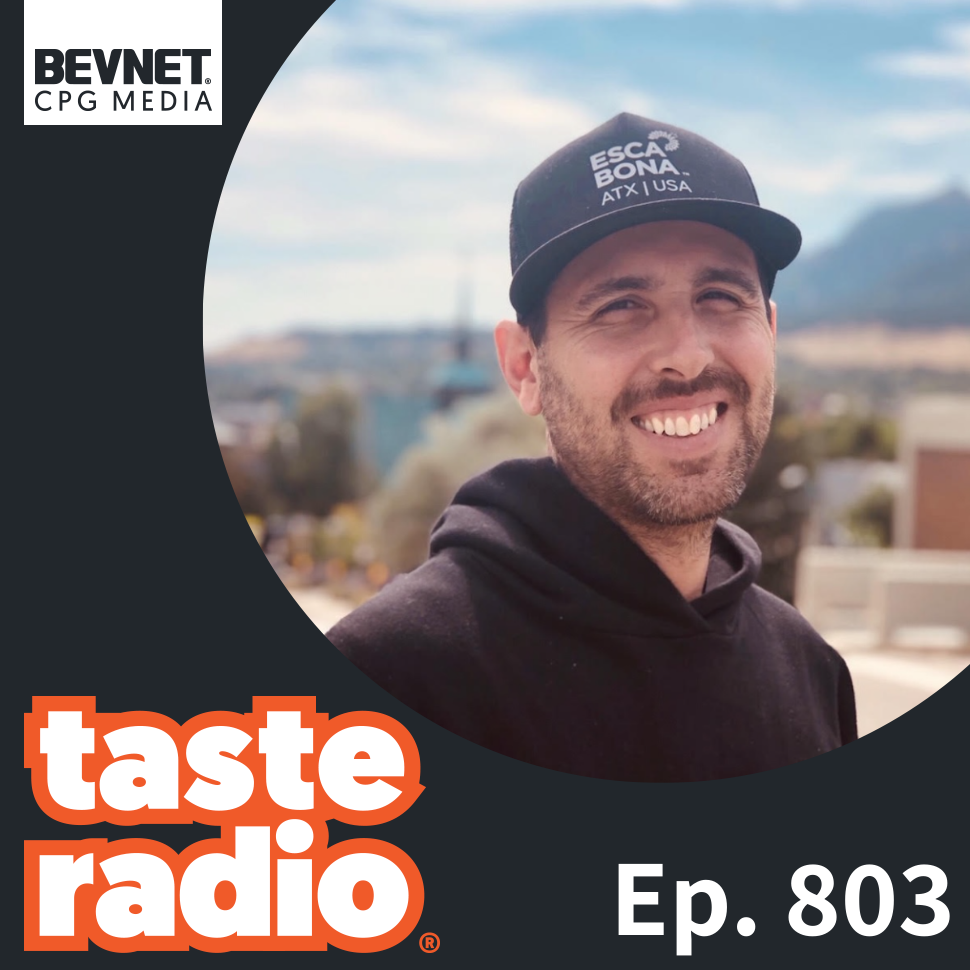
Hey folks, it's Ray with Taste Radio. Right now I'm honored to be sitting down with Chef Jamie Mammano, the founder of Mi Niña. Chef Jamie, it's great to see you. Great to see you too. Thank you for having, having us on the show. I always wonder when I talk to chefs, if they prefer the introduction of them as chef.
Or you just prefer your, your first name, which is it? Jamie's fine. I've been introduced by many other different names. I can't really reset on the, on the radio program right now, so anyone's fine. I've heard stories about hospitality and in the back of restaurants and, uh, they can be pretty, pretty crazy.
Well, that's why they keep chefs behind closed doors. Your restaurant group is. Renowned and really well respected, particularly in the Northeast. And when I visit your restaurants, I always think about how the fine dining experience is such that you couldn't replicate it at home. And I think that's one of the most beautiful parts of restaurants, right, is that's why you go, you go there for the ambiance, for sure, of course, but you also go because you can't necessarily make the same food at home, which is why I love the fact that you got into CPG because.
You can share these delicious foods with people at home without them having to do much except for rip open a package very much so and dip their tortilla chips. And that's what you make . Mi Niña is a maker of tortilla chips and salsas. When did you start the business? Oh, we started our business partner myself, uh, Paul Roiff.
We started business 15 years ago, so we're entering our 15th year. It's been quite a ride, it's been quite an education and we've really having a lot of fun with it right now. It's becoming a natural product strictly on the, on the accolade, you know, the, the qualities of the, of the chips we've been doing.
You know, we created an all natural chip from the very beginning. There's never been any additives or preservatives in it. All the flavors are essentially myself and my chef Jack and the stainless steel bowl developing the flavors, you know, mostly organic corn. We're using organic oil, mostly organic seasonings, and from the very beginning, just wanted to create the best possible tortilla chip.
So we possibly could, with the experience that we had in the food industry and applying that towards a snack has been quite a lot of fun. Over the years, it's resonated so much in the fact that it's become a very strong product in the northeast and very, you know, and now we've, we've taken that down the east coast.
We're going west, we're on the west coast, so it's become a national product. You know, it's been a lot of fun. We've, you know, we've made a lot of adjustments with it. We, you know, we, we've, we're doing a non seed oil now. We're doing olive oil, we're doing protein enhanced chips we're developing right now would be on the market very, very soon.
So it is been a lot of fun. It's been a really lot of fun. And we're we, we've enjoyed this ride. You could have gone into any packaged food category, especially when I consider some of your restaurants are Italian focused. I mean, you could have gone into pasta sauce, you could have gone into pasta itself.
Why tortillas? Chips, why salsa? Well, it's interesting. I, I married a Mexican girl for 25 years ago and um, you should come home and say, you know, I can't find any good quality tortillas in the market. So her mother used to send them from Mexico and FedEx packages. 'cause we'd have tortillas four or five days a week with dinner.
You know, it's accompaniment. That would be the bread. Serve ba basically the bread service with dinner. And it was, you know, we were doing mole and all different types of products, but it was a great, incredible fresh corn tortilla and we just couldn't find that locally. So I was, you know, looking at it 15 years ago, I was like, I mean, there's nothing in the market.
Why don't we just try to introduce a a, a fresh, natural, all natural. Best corn tortilla you possibly could. So we decided, I spoke to my business partner's, got a little side of small storefront in Chelsea, and we decided to open a small little tortilla bakery, meaning we brought the corn in, we cooked the corn.
Just a little filtered water, a little bit of ground limestone, and we are making fresh corn tortillas every day and a hundred pound batches. And you, a customer could walk into this tiny little storefront and get warm, fresh corn tortillas. You can walk in there, smell the corn being cooked, and the tortillas being baked because it's very, very cool.
Fortunately, for some reason we didn't, it didn't resonate with the neighborhood. It was, you know, it was a mix of, that's mostly a Mexican staple, but we had, you know, puertoricano in there, we had Colombians and a lot of El Salvadorians and they didn't really embrace tortillas as much, the Mexican culture done.
So we pivoted, we took the old tortilla, we took the tortillas that didn't sell. The next day we cut 'em up and fried 'em and sunflower oil. And after a very short period of time, we realized people are coming in for the chips. And then we're coming for the tortillas. So we, okay. This is interesting. So, you know, it was a great ship.
It was nothing like anything you had in the market, great flavor profile, a beautiful fresh corn, organic white corn. And then we walked into a Whole Foods 12 years ago and you know, we created a bag. And just so happens the logo on the bag is actually a picture of my daughter making tortillas with a grandmother in Mexico City when she was three.
You know, it was a family based business and you know, we're very proud of it. And so anyway, we walked into Whole Foods. Like, sure we'll take 'em. I'm like, oh my God, what do we do now? You know? So it was one of those things. So, you know, we developed a bag, we developed a logo, we made it happen, and they said, yeah, we'll take it.
So within about six months of that, you know, walking in there, we were in seven or eight Whole Foods in Massachusetts and there was selling crazily over fist. They were like blown away. So over. First couple years, and here we are, you know, 14 years later and we're probably around 7,000 stores around the country, you know, concentrated in Northeast.
But we've become the biggest selling premium ship in the Northeast. And it's, it's not a matter, it wasn't a matter of marketing, it wasn't a matter of anything, it was just a matter of word of mouth. And the customers come and try the product and they realized how different it was. The quality was there.
Looking at the ingredient panel, looking at the nutrition panels, it was all natural. It didn't have, you know, a dozen things on the ingredient list that you couldn't pronounce. It's basically corn, water, and salt, and a little bit of lime. When I first encountered the brand, the first thing I thought, or the first word that came to mind was authentic.
There's something about the logo in the bag and, and you mentioned your daughter is the. Inspiration behind the logo. I, I think the name Mi Niña. Where, where does that come from? Again? That's my girl. My girl. Everything about this looks different than sort of the Americanized version of tortilla chips.
If there is a parallel to Mi Niña, I feel like it's Tito's vodka. Right? Because you know, one of the genius aspects of Tito's is that it looks like a low production. True to its roots and its ingredients type of vodka. Now, even though Titas is probably one of the largest vodka makers in the world, it still has that cachet.
I'm not saying Min Nina is this mega brand that's trying to. Make it seem like they're authentic when they're not, because you just talked about this, the sourcing of ingredients, the quality checks, the quality control, the emphasis on tradition all really plays into what this brand is all about. But you know, for your customers, your retail customers, and then your consumers, what really rises to the top?
Is it the packaging? Is it the ingredients? Is it the taste? If there was a hierarchy of importance for your retail customers and then your consumers, what would it look like? The most important thing for retail customers that it sells, number one. Okay, sure. First and foremost, we could have went to a different packaging.
You know, the sized bag that a Lays potato chip would be, and you know, get another week or two a shelf life. It's not something we wanted to do. We stuck with the bag. We're trying to change the game a little bit. And just to interrupt you real quick, I mean that's an important point because the bag I'm holding, a single-serve bag is white, but your multi-serve bags are brown.
The texture is almost like Like a craft paper. Craft paper, yes. Yeah. You know, the mini bay, there's impossible to do the craft paper. It'd be impossible, but our typical bags is a flat bottom paper bag. And what we're trying to stress to the buyers and these companies to say, listen. Try to think about you going to a bakery, buying a loaf of bread.
It's about freshness, and that's what it's all about. We didn't want to create anything that that lasts for a year. Anything that lasts for a year is not good for you. Anything that has a very short shelf life is better for you. So, you know, we have a four month shelf life on it. That's what the corn does, you know?
So our biggest challenge is like, listen. This is a fresh product we need you to handle like such. We're making it to order for you. We're not inventorying this product. We're not building inventory. Nothing like that. That resonates with the buyer, right? I mean, on top of it, they wanna see it sell, but also the, you know, the bag is a.
We gotta get trials. So the bag stands out. You know, there's a, there's a mile of different ships in the, in the aisle, in the grocery store. You know, they wanted it to stand out. Um, we wanted to get the, a customer, potential customer to see the authenticity of it. And then alls we gotta do is trial. Once we get person to open that bag with a scissor and face that ship it, change the game changer.
That is our biggest thing. You know, we don't have the, we don't, we're not doing a Super Bowl commercial next Sunday. We, you know, that's not us. But if we can get trial, you know, we're doing, we give out samples, we're doing demos. We go buy and taste the ship in a grocery store. Once we have a potential customer try it, more than likely, nine times outta 10, eight times outta 10, they said, oh my God, this is different.
This is what I wanna bring home. This is a healthier version of a chip. I want to feed my kids. So this is what I'm gonna snack on if I do decide to snack. This is one of the something I wanna snack on. So it's, you know, the combination of all those things and what you, you know, reiterated what you said about being authentic family oriented company that resonates with people and the bag itself and be, we hope to market it enough in the bag.
On the bag and the person will see it, try it, okay, this is different. I wanna try it. And usually that's how we built the company, is basically just trial. People taste it and it's worked out pretty good so far. You're absolutely right about retailers. Velocity is so important for them. They don't wanna bring anything into their stores that's just gonna sit on the shelf.
They want things to turn, yes, they wanna bring brands in that are gonna bring incremental value to their stores. But if it's just, I mean, if it's, they might as well just bring in some of the big brands because they know those are gonna turn. So unless your brand is gonna turn as much or more than those brands, why would they bring it in?
And I think in terms of communicating the value. To consumers, getting them to trial again, I think your package does so much for you. It does look different. It looks like a bag you would see or or a product that you would see in a small specialty food store. Yes, exactly. More than you would a big box retailer or even a Whole Foods, but of course you're in both.
Going back to flavor for a sec, I think you touched on this earlier when you talked about the different types of flavors that you offer versus your competing brand, so a jalapeno agave. I don't think I've seen any other brand offer this type of product. Nobody other than meaning yet. Even Pico de gallo.
Probably seen a handful of companies do that. And you have a ton of flavors. I mean, you have, I don't know what is it, nine or 10 different flavor varieties? Well, yes, we, it's almost, it's almost there. We're developing two right now. So we have the sea salt and white corn and or fully organic, certified organic.
We're certified organic in blue corn. We have the jalapeno, we have the pico de gallooo, we have the churro, the cinnamon sugar, sweet and salty, uh, cinnamon. We have a hundred percent olive oil. Organic corn, olive oil for the non-IT oil that's on the market currently that just got introduced about a few months ago.
Fabulous chip. I mean, it's arguably as good, maybe little better than, uh, the sunflower. We, it's really, really good. So we're very happy with that. The sales are off to the, outta the gate is tremendous with the olive oil. That's great. I've always wanted to do a Dorito, that's the biggest selling chip on the planet, so I just wanted to do a Dorito, a nacho cheese flavor.
You're talking about nacho cheese flavor. Yes, exactly. So. I was concerned about, well, you look at a Dorito, there's a lot of stuff in there you can't pronounce, right? So I wanted to do something like that. We developed, we were working on it for a few years actually. We tried a bunch of different things. I came out with great ones, but you know, we're just a small operator.
I don't want to bring cheese into the plant just for allergens, right? I don't want to get, you know, be cross alls. I don't wanna be concerned about that. It's a very dangerous thing. We do start planting with bringing dairy into the plant. So I decided against, we decided against using dairy in the plant.
Just keep it as clean and natural and safe as possible for everybody to try our chips. So we actually came up with a dairy-free nacho is very, very cool. Hmm. So working on that. And they were working on, we played around with chocolate, a chocolate cinnamon churro, which was outrageous. So about three weeks ago, we had a call from what our major retailers said, listen, can you guys do some protein chip for us?
I said, sure. Not a surprise these days. Everyone wants protein and everything, right? It's huge. Everybody is hurt. So like, okay, well we're thinking about it. It's like we did a little research, we got the best protein and we gotta really, we got a pea protein in. Since we didn't go to market with the dairy-free nacho or the chocolate yet, we thought those two best flavors would take on that protein, additional protein, and still have a wonderful tasting chip.
Literally, like literally last week we did a testing on the protein chocolate churro chip and the protein dairy-free nacho chip. And they're freaking outrageous. Hmm. Both of them. So we're going to market with that. We, you know, we're working on bag design right now, but they're both gonna be non acetol.
Protein enhanced chips doing a thin version of chip. We also have a thin and crispy chip, so those are coming to market probably sometime in the early spring and they're simply outrageous and we're presenting 'em right now and the feedback has been tremendous. We have some major players looking to, taking us on right now are all of oil chips are protein chips, so there's a big demand for it and we're responding very quickly to it.
It sounds like if a retailer asks, you are happy to deliver when it makes sense, but innovation is a slippery slope, right? I mean, you have a flagship variety, your C cell variety that sells really well. I always have a bag of it in my house. Yeah. But when you are introducing new flavors or introducing new varieties, say one that includes protein.
It might be a little bit of taking your eye off the ball, and some founders have admitted to this. How do you consider introducing new forms of your tortilla chips while staying true to what the original vision is for Mi Niña? Well, the original version of Mi Niña, the Culture, Mi Niña put the best in category, best in class on the shelf in the grocery store.
So in addition to protein, there's natural plant-based protein, still change, staying traditional to the product. Very high quality product. That's what our customers are looking for. That's what, you know, that's what our, our buyers are looking for. That's what the customers are looking for. We gotta respond to that.
Same with the, you know, all the press by the non oils, I mean, adapt or die. I mean, you gotta, you know, it's a very competitive, competitive field here. You know, interesting enough, we, you know, we, we, we read about the non seed oil and then we're like, well, we go to the avocado oil. Everybody's going, everybody, you see all them snacks.
Now they've converted to avocado oil. And, you know, we were looking at that. We tried, we, we got avocado oil and we tried it and let's, let's, let's try some olive oil too. We tried it as well, and we felt the olive oil flavor was better. So decided to go with the olive oil because now, now we're in a white space, as they say, in the, in the industry.
So actually, you know, we met with a major buyer a couple weeks ago, and that's where I heard the term for the first time. He goes, Jamie, you got into white space with your olive oil. Taste is absolutely delicious. So we're not sacrificing quality, we're not sacrificing anything. We're just giving it what the customers, the buyers want for the stores.
And you think about it, if you walk into a store, whole Foods, we have two flavor. We have salt and Pico gao. If you walk in a different store, they have two different flavors, salt, and another flavor. So depending on who the customer in, depending on what region of the country at there are different flavor profiles.
The buyers are different. We're not gonna do 50 flavors. We're not gonna do, we're not gonna do late July thing. We're not gonna do 12, 15 different flavors. That's not us. But we're just responding to the requests, the demands of the buyers and the, and what the chip eating public are looking for it. Have buyers asked you about.
Non GMO in organic. I think when I see your chips and I see Mi Niña next to a competing brand and Mi Niña is organic, I'll just say what it is. I mean, I shop at Wegmans a lot and I'll see one brand and then I'll see your brand. And both brands look appealing to be honest. But me, Nina is more appealing to me 'cause I know what the chip tastes like and.
It's organic, it's USDA, certified organic. Yes. When did you decide to go organic with some of your products and and how much does it matter to your customers? Oh, it matters to us, number one, and it matters to our customers as well. I mean, we pivoted to organic three and a half years ago, a hundred percent organic.
So we, you know, when we, we both occur in plant, in, in Brockton, we decided to go fully organic, meaning we're spending three times the amount of money on oil, substantial increase on the corn. We decided to commit ourselves to that. It is all about the chips and, you know, giving what our customers want and, you know, responding to the press out there.
And, you know, we have to pivot. I mean, you can see the PepsiCo and Lays are pivoting quite crazily right now. Everybody's pivoting to cleaner label and all this other stuff. But I, we did that. We started that 14 years ago. You know, we feed a lot of people in our restaurants every week and for many, many years, Mr.
Straw's been almost will be 30 years next year. The focus on quality has always been there. It's, it's my entire life that's all I do is, you know, I think about food all day long. If I go traveling with my wife, she's, she's going to museums and churches and stuff like that. I'm like, you go, I'm good. I'm gonna go get a couple restaurants, have a couple snacks.
You know what I mean? That's what I do. I mean, that's, that's, you know, that's why I drew, I think about all day long. So it resonates with the product here. So it's, it is pretty cool. And I have my daughter's working in now, she's in the office next door. She's assisting, supporting Mark sales and marketing and she just graduated, uh, college last year.
So she is, you know, it is great. She's, having her in here is awesome as well, so it's fun. That is fun. It's great to be able to work with your family and especially be able to provide them with jobs, especially right outta college. But God, I'm not gonna be around forever. You know? Maybe you can run this for, run the company for us down the road, but we'll see.
You know, we'll see. You know, we're, you know, we love what we're doing. We, you know, we really enjoy coming here every day and one day. You know, every, there's always, well, let's talk about the future for a second. Sure. One of the challenges of a fast growing brand is that you think about how much you can produce.
You think about forecasting demand, not just for this year, but for the following and what you might need to expand your facility. What you might need to expand your sales force, and it really, I think, depends on your ambition as an entrepreneur. What do you want to do with this brand? How far do you want it to go?
Especially for one that's as established as you and has such a following here in the Northeast. You don't need to be national, in my opinion. You've built a great regional business here, but how do you think about ambition and the future of the company? Well, from the very beginning, I mean. It's kind of a audacious to have a make a statement like this, but I want, you know, the audacity to have this.
I wanted to change the snack game. I really did. You know, once we got into it, I said, we got something very, very special here. Why can't we, let's change the snack game. You know, let's put a clean ingredient. No preservative organic corn, organic oil, really put an effort into putting the best, healthiest version of a snack we could possibly do, and we've done that.
And as far as long term. Let's see what we can do with it. I mean, you know, there seems to be a demand for it. We've, we're doing well in other regions. We, you know, it's not New England yet. I mean, it's, you know, it's not, we, we don't have marketing crazy budgets for marketing and all this other stuff. We have a great sales team.
We have a great new, sales VP here is amazing. John Gentilly. We have a regional salespeople. We've handpicked some very small, , sales teams around the country. And,. They're all excited to work with us and we're excited. We're just excited to see what, what can happen with it. There's no real end game.
There's nothing. Let's just continue to have fun with it, and it's kind of cool after being in the restaurant business for 50 years, you know, close to 50 years. It's nice to do something different. You know, you. It's fun. You seem pretty relaxed, which is great because typically CPG entrepreneurs are pretty stressed.
They, they've got a lot of things going on, but having been in the kitchen for 50 years, I imagine that the stresses of I seem a like crazy. Yeah. The, the stresses of being in the back of the house can be pretty. My numbering. Yeah. I'm pretty good of with fireman. I've been put on plenty of fires in my day, so it's, it is fine.
You know, it's, it is fine. We're just, and we have a great group of people here and, uh, many people have been with from the very beginning, 14 years, you know, small. We are cutting the tortillas by hand and frying small batches, you know, so we have a great group of people here and everybody cares. Everybody cares about what's going on.
What's tougher? The restaurant business or the CBG business? Oh, CPG. CPG much tougher. We had no idea what we were getting ourselves into, but it's very competitive. It's, you know, it's very cutthroat, it's very competitive. We're like a baby David going against Goliaths here. Right. It's challenging, but for some reason our, you know, the customers have tried our product and it's resonated with them, and it's just growing every, every month by month.
It's, this year is gonna be tremendous. Last year was crazy and this year is gonna be insane, I think. Do you need to expand your facility at some point? Potentially, yes. I mean, we're, a facility we're in right now is good for another, probably three years, but we're considering a second facility in the Midwest to accommodate the, the Midwest growth and the West Coast growth.
How about funding? I mean, as you grow is outside funding or is outside investment something that you consider? No. No, we're doing it all, all in house. We have, uh, my partner, myself and, local financing here, bank finance helping us out as needed, but we're, we're fine. We've had, you know, obviously, you know, private equity is, is knocked on our door many, many times and we've, we've never been interested in that and we can handle ourselves and, , it's worked out great for us.
Private equity is not of interest to you because we don't need the capital, we don't need it. You know, we we're self capitalized and we're, we're good. That's really good to hear. Yeah, it's awesome. If you can run your business on your own terms without any outside investment, you can dictate the terms of your growth.
Well, for the most part. But I am so happy that me, Mi Niña, is such a, on such a great path because it is such a great brand. Thank you, and I've really been looking forward to sitting down with you. Jamie, thank you so much for taking the time. Oh, Ray, thank you very much. We very excited to talk to you. It was nice meeting you as well.