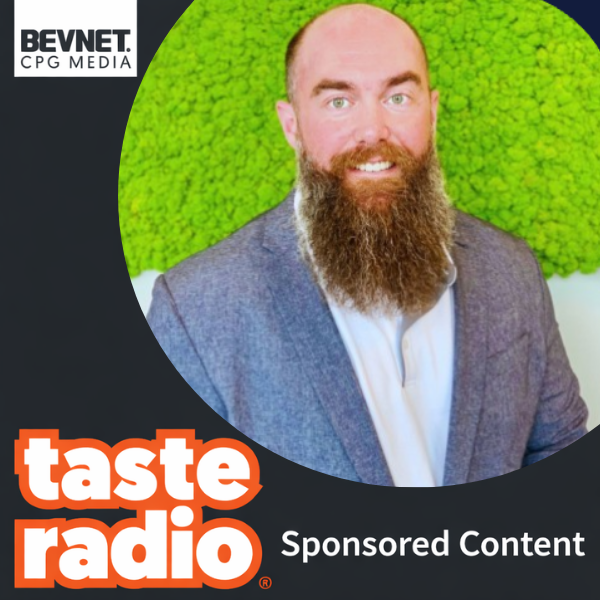
Hey folks, it's Ray with Taste Radio right now I am supremely honored to be sitting down with Matt Joyce, who is the founder and CEO of Toom. Matt, it's great to see you. Thanks for having me, Ray. We're here at Expo West and if you're at Expo West, you gotta be on brand and you're as on brand as you could possibly be, my friend.
You are wearing a neon yellow sweatsuit. You got the hoodie, you got the pants, you got the shoes. The shoes are not branded, but are they? No, they're not. Well, you gotta get some Toom shoes for the next one. Yeah, we, we say it's like smelling salts for your eyes. We stand out 'cause you are a garlic dip. We are.
And you've got, you gotta live the brand in, in every way, which way you can show up. Exactly. How many expos is this for you? I believe number eight. Okay. So it's actually my birthday today. Happy birthday and thank you. So every birthday for the past eight years, I stand behind a booth for 10 hours and ask people if they like garlic.
Okay. Your North Star for a long time, and I, I wonder if it's still true, is that you wanted to give consumers a different type of condiment, a new ketchup, as it were, but garlic and tomato-based condiments don't necessarily seem like they fit in the same refrigerator, but now they do. Time has really caught up to people's willingness to try different things and people's willingness to use.
A different type of dip spread condiment than has existed for, you know, decades past. Where did this idea come from and why did you decide to commercialize a brand like this? Yeah, so my mother, Kathleen is Lebanese maiden name, Mansour Mansur. Uh, my dad is Irish. And we grew up eating it. So it's a, it's a Lebanese product category.
Garlic dip sauce spread, whatever you want to call it. Made with fresh garlic oil, lemon juice, and sea salt. And then it's emulsified. So it basically lived in our fridge growing up. We ate it with everything. The mode meal was basically take a piece of Lebanese flatbread, rip it off, grab some chicken, dip it and eat it.
French fries, same thing. Kebabs, kafta, tabouli like our. Holidays are basically like half traditional food, half Lebanese feasts. So that's what we grew up with. You're making my mouth water talking about all that food. It sounds amazing and yes, what makes it is the garlic tip. I mean that's, that's the through line.
Mm-hmm. I think for all those foods, because it adds so much flavor. Yeah, Toom. It's really light and fluffy consistency, and that translates to the extreme versatility as a dip spread sauce, marinade, even cooking ingredient kind of garlic made easy. It's kind of a new format to deliver garlic, right for us.
Communication wise, we want to use one hammer, and that hammer is the bold flavor. So we consider our superpower bold flavor, serviced by that fresh garlic from Christopher Ranch in the garlic capital, the world Gilroy. It's the best stuff money can buy and it's very concentrated in flavor and they're a great partner of ours.
We just visited them before Expo West, so kind of a dual trip, but that's where a little bit goes a long way. You're probably not going to eat half a tub of Toom like you could with hummus, but at the same time, it's so versatile. You'll probably eat it more frequently, A lot more use cases. Well, if you did, you have a great co-marketing opportunity with some sort of.
You know, breath mint company perhaps, you know, I don't know if you've ever explored that. Uh, we lean into the garlic breath. It's a, it's a point of pride. Another part of your superpower. Another superpower, perhaps. Yeah. Yeah. The flavor is so critically important. I wonder how much of the ethnic angle was something you considered.
It doesn't look like an ethnic brand. I know you've gone through a rebrand, but Toom as it stands right now looks like a very Americanized, and I mean that in a really good way. Yeah. Type of brand. You have your little garlic mascot on there. It looks a little bit like a ghost, but like a cute ghost. The Toom is in big letters on the side of your tub here in a really fun and I think approachable way.
And then garlic dip is very, very clear. You know what you're getting into. Right. But how much of the ethnic angle did you want to incorporate at all? I mean, was that an early part of the brand? Was that something you ever considered? The Lebanese heritage is really important. Obviously it's inspired by Tom, TOUM, which translates to garlic in Arabic and just, I mean, us growing up all of our holidays, like I said, like it's always such an integral piece of our celebration and bringing family together through food.
But for the American market, I just wanted to. Make sure that it's not, you know, globally inspired foods are trending now 14 years ago they weren't. But at the same time, like I don't want it to be seen as a niche ethnic product. I want this to be enjoyed mainstream. So we're really leaning into the big, bold flavor.
Big bold branding color. The bright yellow that really pops. People who love garlic, people who love bold flavor. This is for them. So. Again, you want to honor the heritage, but it's not a key part of your selling strategy. I think it's just more secondary on Instagram and the website that we're developing will definitely tell the story really well there, and the Lebanese heritage and our backstory, like my.
Great-great Grandpapa. Joseph Moses Manser came from Lebanon in 1913, actually had his own corner grocery store, so apparently this business is in our blood. Mm-hmm. But yeah, we just need to continue to tell that right now we're kind of hammering the bold flavor. Uh, next up is the versatility and then building that website from scratch and Instagram content.
We're gonna start leaning into the story as well. Matt, you come across as being. Very confident about how you want to talk about Toom, how you want to communicate the highlights of a brand and products like yours. Was this developed over time? Did you always have this sort of laser focused vision of, of how you wanna sell Toom, how you want to market this brand?
Or was that just developed over time? Definitely refined over time, you get insights and then try to act on them. I like to have a direct feedback loop. That's why I have my email on every single package. We're not a direct to consumer brand, so it's tough to hear from customers. So this way I get to hear from them for free and see what they're thinking.
Like, why did you first buy it? How do you use it? And you kinda learn and see what hits home with people. At first, I feel like the tendency as an entrepreneur is to cast the net too wide and not catch any fish. So it's the garlic angle, it's the flavor angle, it's gluten free, dairy free, kosher, non GMO.
And you just like say so many attributes and you realize it's a really noisy world. Mm-hmm. And you just need to break through with one hammer. And that's where over time we realized that our hammer is flavor. Shout out to our advisor, Jason, who we had many conversations with us. Simple is often way more a hundred percent.
Yeah. Yeah, yeah. My colleague Lucas Suther wrote an article about Toom a few months back and. I think the first, or maybe second sentence was about how Toom has stayed under the radar. Yes. Uh, for many years, but I think under the radar was an appropriate term. Mm-hmm. For Toom because you had been building a brand that hadn't been in the spotlight, you hadn't been going out there.
I think in engaging with the media as much as some other founders do, and I think that was probably a smart move. Mm-hmm. Were you intentionally trying to, you know, keep things. Quiet until you achieved a certain amount of success and traction. Very intentional. Uh, one, love Lucas. He stopped by yesterday.
Uh, great people. Good hair. Great hair, great hair. I literally complimented him on his hair yesterday and yes, very intentional. A mentor once said, stay under the radar until you have wings. So that's what we did. 10 years of r and d and then the last four years. We've scaled very quickly, Inc. Just released their list and we're the fastest growing food company in America right now.
So now I think it's time to kind of flip that switch and that's why I'm here. I, I gave Lucas a stiff arm for maybe a couple years and said, Hey, not quite yet. And now's the time where we're actively pursuing PR and interview opportunities like this. I thought you were here 'cause we could just hang out and chat.
Yeah, I'm down to hang. Birthday. Birthday. Happy birthday. Birthday month. Yeah. Retailers sometimes need. To know who you are. And I think awareness is sometimes the most difficult part, right? Of starting a CPG brand and scaling one because there's just so many brands out there. You go out the door here at Expo West and what, there's like 2000 food brands.
Mm-hmm. You know, 700 beverage brands and everyone's gotta try to stand out one way or another because that's how people know about you. That's how retailers, investors, distributors know about you. How did you get retail to be interested in what you're doing? Was it as simple as doing the traditional.
Pitches and cold calling and emails and going into grocery stores. When did you find a willing audience to hear about Toom and what you're doing? Really difficult product to commercialize. So I actually got an Expo West booth while we were still commercializing the product. 'cause there's a what year? Oh gosh.
Uh, maybe like 2017 or 18. Okay. I wanna say. But basically there's like a chicken or ag situation where in order to land, uh, legitimate manufacturer, you need retail demand. But in order to land legitimate retailers, you. Manufacturers with these certifications. So that's where I thought, alright, I'll go to a show and try to essentially pre-sell this product in order to solve that chicken or egg.
How'd that work out? It worked out well. Uh, eventually we got in front of Whole Foods Global Dips Buyer. Shout out Parker, and got a meeting with him down in Austin, Texas. And we were very small at the time. Still had to kind of figure out how to finalize and commercialize the product, but I just asked for Midwest distribution only and he took a flyer on us.
And then it was just me, my mom, sister, and brother-in-law, just doing hundreds of demos, driving across the Midwest, just learning and getting product into mouse and seeing reactions and just a constant trial error and refining process to find your formula to get product off shelf capital efficiently.
What you did in the second half, once you were on shelf, was absolutely the right strategy. Mm-hmm. Someone once told me, I've said this a thousand times on the podcast, getting on shelf is the easy part. Getting off shelf is the hard part. Way harder. Yeah. So you, you were doing the right thing, getting out there, getting on the road, doing the demos, making sure people were aware of your products mm-hmm.
And buying it. But again, you still have to get on the shelf. Yeah. Did this Whole Foods buyer just stumble upon your booth? Were you really aggressive or, you know, assertive in getting to know this person, making sure that he stopped by and knew what you were doing. I think I messaged Whole Foods buyers, probably like three of them over a handful of years.
And, and was this on LinkedIn or email or how did you, this was LinkedIn dm. Okay. Yeah, so I, I mean, I highly recommend LinkedIn. You're able to get your message across. The eyes of almost anyone as long as they have a profile. So that paid premium membership, I think is totally worth it. And then it just comes down to your little hook and, and does it land?
If it's something that intrigues them and and is what they're looking for, then they'll respond. And if they don't, then it's the wrong person. Or maybe it's too early. Well, persistence sounds like it paid off. Yes. I mean, how many, over three years, how many times did you DM this guy? Uh, DMed a few different buyers over probably four years.
Okay. Yeah. And eventually one of them responded, or eventually just one of them came to the booth. Uh, eventually one responded and I was able to meet with him in Austin. What was the hook of your message? What really got them excited? Man, it was so many years ago at this point, but I mean, I, I imagine it, I imagine you're, you're forgetting, but I, I think.
The message is as important as finding the right person. Let's say you're like, okay, wow. I finally know who the category buyer is for Whole Foods or for Wegmans or whatever. Yeah. But then you gotta make sure that you're saying something. There's something in the showing the con, in the concept of your message, yes, that's really going to get them.
It's just gonna set a little bit of a fire under there. Mm-hmm. Did you use words like category defining or category creating? Pioneering? Was there something about how you described Toom as a. Disruptor as a differentiator. Mm-hmm. That got people again excited about the brand. Yeah. I think the fact that our product category is completely unique and differentiated, it really helps in that selling process.
For example, when I. Met with Parker before I did. I went to the Whole Foods in St. Paul and I counted the amount of hummus skews. There are 49 different hummus skews, so in the pitch, it's pretty simple. You know, give us a few facings. You're probably not gonna sell much less hummus yet. You're gonna surprise and delight your customer.
Hopefully a treasure hunter customer, like that whole food shopper, give them something new and drive incremental sales for the deli dip set. So that's the hammer that I use now. Pitching short and sweet will drive incremental sales is truly differentiated and we are the category defining pioneer. I think two things were great about that.
Pitch one, you did your homework. Two, you said you're gonna do better having us on your shelves Yes. Than you, than you would otherwise. Mm-hmm. So I think if I were a retail buyer, I'm like, okay, now do I actually believe that they're gonna do what they're gonna do? Mm-hmm. And then you prove it out by executing and doing the demos that you did.
Mm-hmm. When you moved on from, or not moved on, from when you built from Whole Foods into other retailers, or you using the data in retail success that you had there as a springboard, or did you have to tell a slightly different story from chain to chain? Absolutely Whole Foods. I tell up and coming entrepreneurs, you need to focus everything on just getting into Whole Foods early.
One is it solves that chicken or egg, it's enough volume to land a manufacturer. Two, they do amazing due diligence and it's really hard to get on their shelves that are picky. So other retailers will say, Hey, if Whole Foods. Put them on shelf, then it's almost like Whole Foods did the homework for them, right?
It's a valid, valid. They trust that it's validation. And then three is the data access. So a lot of different retailers, you either can't get your data or you have to pay a bunch of money that you can't afford when you're young in this scrappy startup. So being able to see, I sold seven units. Of two original garlic dip eight ounce yesterday at the Lincoln Park.
Whole Foods is incredible granularity. It allows you to ab test different things over years to find your formula that actually works. I imagine it also helps with your innovation strategy. Giving you permission to say, okay, now is the time to introduce a smaller format. I have a formal advisor, his name is Jason, and he used to be the chief marketing officer for Sabra and they have a very popular snacker called Smart Snackers.
And so it was kind of, uh, stress to me how great of it. It's great for two reasons. One is very high volumes. Skew. And number two is it's an excellent trial mechanism. So even if the snack pack with pretzels, even if it's not like a huge profit center, it gets that dip into mouse at scale and you're able to penetrate that convenience channel.
And that's really helpful. 'cause if people try it and like it, then ideally they graduate to the eight ounce or the 16 ounce and then that product lives in their fridge and they eat it routinely. You've used the word hammer a number of times, I think. No, but I, I, I think that's a great word. I, you know, no one else has used this in any of the 800 episodes really.
That we've, that we've had of taste radio. Surprised by that You're owning a hammer right now. Okay. But I think one other, I guess hammer for the brand could be your color, yellow. You own this bright, bold, neon yellow color that definitely stands out on the shelf. Mm-hmm. Does not look anything like, you know, any other dip or hummus brand that's out there.
And when you decided to introduce this color, I think was a huge moment, an inflection point for the brand. This was not obviously the original package and you were not using yellow, if I'm not mistaken. As boldly as you are now. Right. We used to have four different flavors and original was yellow.
Because the secondary flavor is lemon, so that's where the yellow makes sense. And also obviously like garlic is white. Do you make the package white? But if you're gonna have a white package with garlic imagery on it, what are you gonna do? White on white? So it doesn't really work. So that's kind of the origin or the logic behind the yellow.
And then the bonus is just, it really stands out like bright yellow and red I think are the two colors that catch your eye better than any other. And we've just seen, like especially at Costco where you have the big yellow tub plus the yellow box, how much it pops and really just like sticks out in sometimes a, a sea of sameness.
And the yellow also is something, again, you can hang your head on. And even if people don't know. Toom, they can say, oh yeah, that the, you know, the yellow brand of garlic dip. I think there's, there's just something really easy for people to remember. Mm-hmm. Because again, if they, even if they don't remember the brand name, they remember.
The color and the boldness of that color. Yeah. Owning a color really important. I'm glad we have this bright yellow and excited. We did a brand refresh this past year, new logo and created a new mascot. Uh, the ghost guy, you said? Yeah. It looks like a little ghost. Uh, we, we call him garlic head. Okay. I like it because one, it's the mascot's name and also we're gonna call Toom fans Garlic Head.
So that duality, I thought clicked really well. You've built a great business. You've been willing to be patient, or at least unintentionally patient mm-hmm. For a number of years. Are you still taking things step by step, or are you feeling like, you know, now that you have the momentum you have, you've gotta run as fast as you can.
Run like the devil's chasing you For sure. So it was 10 years of, of basically no growth, just laying a foundation in order to scale. And once that foundation was laid, we've grown faster than any other food company the past three years. So, uh, you know, started with Whole Foods and expanded with them.
Launched with Publix, Wegmans, HEB, target, giant, Costco. Did you say Wegmans? Yes. So Wegmans was like our big win after Whole Foods, Wegmans and Publix. We, we love them both. Yeah. Well, I'm a big Wegmans fan and mm-hmm. It feels like Toom easily fits into Wegman's selection. Yeah, because they have a, they have a great selection of products and I don't even know how they do it.
It's almost like they pick the best two or three brands. Mm-hmm. And that's all they have for a particular section. You know, some categories are different than others, but I think in the brand of refrigerated dips like that is their. I mean, you go there specifically for that. It's simple, but very effective.
Yeah. That's where I recommend entrepreneurs go Whole Foods first and Wegman's. After that, you know, it's a hundred and some stores, it's not a crazy scale. You're not biting off more than you can chew. But the velocities are so good and they just are amazing at running a business. Are you happy? Are you happy with the direction of the brand?
Are you happy that it took this much time to get to where you are right now? Because a lot of brands that start out don't make it past year one. They don't make it past year two. I mean, there's a lot of brands here that are like on five years, but they really don't have a lot of momentum, and then they're just kind of there.
Are you happy that it took this long? I mean, are you happy that you had to kind of work at this and, and get to a place where. You know, you didn't have the instant success because the instant success might have been a bad thing for the brand. I am super happy. Two years ago I was living in my brother's basement, so I'm sure you can imagine.
I'm thrilled. Okay. It's been an awesome few years. Shout out, Mike. Thank you. Free rent. So you've been living that entrepreneurial life. For a long time. Oh, oh, yeah. Had, uh, moved back into my parents' house twice, uh, brother's basement once, over the past 14 and a half years. So it was a, a grind and, and bootstrapped and family's been amazing.
We're still a hundred percent family owned and run, just like I said, me and my mom the first eight years, my dad has that very big on the brand. Sister and brother-in-law have put in their own money who I work with, who are here at the show. So it's a hundred percent family owned and run, super lean, bootstrapped.
You never gave up on the dream though. I mean, you could have gone back into finance per se and mm-hmm. And done something different. I imagine you could anyway, but what kept you going all those years? I think you get more and more pot committed as every year goes by, so it's time invested. Money invested, family, money invested, and then eventually identity.
Like once you're doing this garlic dip thing for a number of years, that's all people know you for. So anytime you run into an acquaintance, it's always the one question, oh, hey, how's that thing going? So there's a lot of pressure like, damn, I can't, I can't fail. So, but it's also scary when you're nine years in and you still haven't figured out how to commercialize the product.
There is no light at the end of the tunnel and you think you're not going to because you haven't figured it out the past nine years. So what are the odds that you're going to figure it out ever? And so again, yeah, I mean after that night's year, were you just like, okay, if it doesn't work in year 10, then I'm done?
No, I mean, I had conviction from the very start and I thought that this could be big. And I thought that this should be in grocery stores nationwide and eventually around the world. And like I said, more and more pot committed. And also, it's not like you're not making progress. Like it's uh, two steps forward, one step back, and sometimes you solve a food science challenge.
That then creates a new one. So that's where it's just a, a very, very long journey. A ton of scar tissue. I would never do it again, but I'm so glad I did. Well, I'm really glad you did too because Toom is a tremendous brand and it is making waves, and I'm really excited for the future of this brand. I definitely get a sense that you are in a better place and, and just in a more comfortable place.
I think like entrepreneurs, sometimes you can just sense that. It's a grind and it's difficult and you know, I hear you are talking to me right now and it seems like, like it's fight finally worked. It's, it's working, it's working demit, you know? Yeah. Which is, which is awesome. Yeah. Finally working in, you know, 2019.
My, my sister Kelly and brother-in-law, Rob. Uh, who's been my right hand man for years now. They also quit their jobs. Moved from Philadelphia to come work with me. Gave up everything to just like bet on this vision. So that's also what makes me really happy is like, it's not just. Me in those, that decade of r and d.
It's also other people who saw the vision and believed in me and it's now paying off for them as well. So that's where just it's that extra level of happiness or like we finally, it's finally working, being able to give your family gainful employment. What's better than that? Right. Matt, thanks so much for taking the time.
As I mentioned, really excited for you and grateful we had this opportunity to sit down. Thanks, Ray. Appreciate it.